IThe Difference, Which Nobody Gets Right
Almost every shop, book and website that sells these things uses the two words as though they meant the same object. They do not, they never have, and the distinction is not academic: it decides what the thing is made of, when it is made, what is written on it, and what you should expect of it.
An amulet is passive. Its name comes through Latin amuletum, a word Pliny already uses; the root is probably amoliri, to drive away, to avert. It is a thing worn or hung, and its whole function is to stop something arriving: the eye, the demon, the fever, the bullet, the drowning. It can be found rather than made — a holed stone, a caul, a four-leaf clover, a tooth — and it usually needs no ceremony, no hour and no consecration. It works, if it works, by what it is.
A talisman is active. The word comes through Arabic tilsam from Greek telesma, meaning a completed rite, a thing that has been consecrated. It is made, deliberately, out of a specified material, at a specified astrological moment, engraved with specified figures, and charged. It does not sit between you and harm; it goes out and fetches something: money, love, victory, favour, a dream. It works, if it works, by what was done to it.
The practical test is one question: could you find it on the ground? If yes, it is an amulet. A hagstone picked up on a beach is a complete amulet the moment you pocket it. A talisman found on the ground is somebody else's tool and, in most traditions, is either useless to you or actively dangerous, because it was cut for another name, another hour and another intent.
The two overlap constantly at the edges, and I am not going to pretend otherwise. The seal of Solomon is worn passively and made ritually. The Egyptian scarab is inscribed, which is a talismanic act, and worn, which is an amuletic one. A saint's medal is blessed, which is a consecration. The line is real but it is a spectrum, and where an object falls on it tells you honestly what to expect from it. Everything on this site sits on the passive end. Everything on Talismans sits on the active end, and that site opens by arguing the case from the other direction.
IIWhat an Amulet Is, and the Four Ways It Was Thought to Work
Strip away the local detail from five thousand years of protective objects and there are only four mechanisms underneath. Every amulet in this catalogue, from a Sumerian bronze to a rabbit's foot on a keyring, is using at least one of them, and the good ones use three.
Similarity. Like affects like. An eye against the eye. A hand against the hand. A hard thing against a blow, a red thing against blood, a knotted thing to bind. Frazer called this homoeopathic magic in 1890 and the name has stuck, though the practice predates his framing by all of recorded history. The doctrine of signatures is the same principle in medicine: a root shaped like a man treats a man.
Contact. Things that have touched keep touching. A relic, a scrap of a saint's robe, a pinch of earth from a battlefield, wax from the paschal candle, a bullet that hit somebody else, your mother's ring. This is why the most powerful amulet in most people's actual possession is not bought: it is inherited, and its power is a documented chain of custody.
Inversion. Make the guardian worse than the threat. The Romans hung a winged phallus with bells over the door; the Greeks used the severed head of a monster; the Assyrians wore the demon Pazuzu; the Chinese pasted terrifying door-gods on the gate; medieval masons put grotesques on the roofline. The logic is consistent and slightly comic: the eye that means you harm should meet something so obscene, so ugly or so ridiculous that it flinches, laughs, or looks away — and a glance that has been broken is a glance that has failed.
The name. Once writing exists, the strongest amulet is a word. A verse of scripture, a divine name, an angelic name, a nonsense word of power. It is sealed into a case and, crucially, is usually never read again. The Jewish kame'a, the Islamic hijab, the Ethiopian scroll, the Alpine Breverl, the Tibetan ga'u, the West African gris-gris and the Roman lamella rolled in gold are the same object built by six unconnected traditions: writing, folded, in a container, worn.
Note what is not on that list: any claim about energy, frequency, vibration or crystal resonance. Those are twentieth-century vocabulary laid over a much older practice, and I do not need them. The historical amulet does not claim to emit anything. It claims to stand in the way, to look back, to disgust, or to speak on your behalf, and it has claimed those four things consistently in every culture that has left a record.
IIIThe First Amulets
The amulet is older than agriculture, older than the wheel, older than any god whose name survives. What survives is what does not rot: stone, bone, shell, amber, tooth.


The pattern in the earliest material is remarkably stable. Pierced animal teeth, especially of predators. Shells, especially cowries, carried hundreds of miles inland. Amber. Red ochre, rubbed on the body and on the dead. Naturally holed stones. Fossils — sea urchins in chalk graves, ammonites called snakestones, belemnites called thunderbolts and elf-bolts, and Neolithic flint arrowheads picked up by Iron Age and medieval people who had no idea what they were and concluded, reasonably, that they had fallen from the sky.
What all of these share is that they were found, not made, and that they are anomalous: too regular, too coloured, too shiny, too obviously a weapon, too clearly not from around here. The oldest human theory of protection appears to be that the anomalous is powerful, and that carrying it puts you on its side.
IVThe Evil Eye
One belief accounts for more amulets than every other cause combined, and it is found across a band of the world running from Ireland to India: that envy can be transmitted by looking, that the look is often involuntary, and that its favourite targets are babies, brides, livestock, crops, and anyone who has just had good fortune and been careless enough to enjoy it in public.
The Sumerians wrote against it. The Greeks called it baskania, the Romans fascinatio — the root of 'fascinate', a word that used to mean bewitch. Pliny discusses tribes whose glance killed. The Quran and the Hadith address it; the Talmud says it accounts for more deaths than natural causes. Turkish, Greek, Italian, Spanish, Persian, Indian, Ethiopian and Latin American practice all maintain live, daily countermeasures, and every one of those countermeasures is one of three moves.
Give it another eye to meet. The nazar boncuğu, the blue-and-white glass eye of Turkey and Greece, is the purest form: it is an eye that stares back and, in the folk explanation, absorbs the glance and shatters when it has taken too much. The Egyptian wedjat, the eyes painted on a Greek cup, the eyes on a Mediterranean fishing boat's prow are the same device.
Give it something obscene or absurd. The Roman fascinum, the Italian horn and fig, the Portuguese figa, the exposed grotesque. A stare cannot survive laughter.
Give it something bright to land on first. Silver, sequins, mirrors, coins, bells, tassels: hung on a horse's harness, a bride's headdress, a baby's cap. Whatever glitters catches the glance before the child does. This is why so much protective jewellery across the whole Islamic and Mediterranean world is deliberately noisy and deliberately shiny.
Then there is the fourth move, the most psychologically sophisticated of the lot: spoil the thing being envied. Smudge the baby's face with soot. Praise a child with an insult. Add a deliberate flaw to the perfect carpet. Say 'mashallah' or 'kein ayin hara' or touch iron before you admire anything. The logic is that perfection attracts the glance, so nothing that matters should be allowed to look perfect. There is not a culture in the eye-belt that has not arrived at that idea independently.


VYour People
This is the part of this site that I built it for. Below is the protective tradition of thirty peoples and periods, each with what they made, what they made it against, and what surviving objects look like. Find the one your family came from. If your line is Neapolitan, your great-grandmother almost certainly hung a cimaruta over your grandmother's cradle, and I can make you one from a documented original. If it is Swedish, the hammer. If it is Cornish, the holed stone and the witch mark. If it is Punjabi, the black thread and the silver tube. This is not a costume; it is a family record that happens to be made of metal.
Ancient Egypt · Mesopotamia and the Levant · Greece · Rome · The Jewish world · The Islamic world · Christendom · The Norse and the Germanic North · The Slavic lands · Italy and the South · Britain and Ireland · The Romani · The German lands and the Alps · Spain, Portugal and Latin America · West and Central Africa · India and the Himalaya · China · Japan and Korea · Native America and the Pacific · Persia and Central Asia · Carthage and the Punic world · Ethiopia and the Horn · The Philippines and maritime Southeast Asia · Greece, the Balkans and the Orthodox world · France and Provence · Soldiers, sailors and the modern world
Ancient Egypt
c. 3100 BC – AD 400No people has ever made more amulets, or been more systematic about them. The Egyptian dead were wrapped with them in a fixed order set out in the Book of the Dead: the heart scarab over the heart so the heart would not testify against its owner at the weighing; the tyet knot of Isis in red jasper at the throat; the djed pillar, the backbone of Osiris, at the spine; the wedjat eye, the eye of Horus torn out by Set and made whole again, wherever a wound needed closing. The living wore the same things in faience, the cheap blue-green glaze that let a labourer own what a noble owned. Petrie catalogued more than two hundred and seventy types.


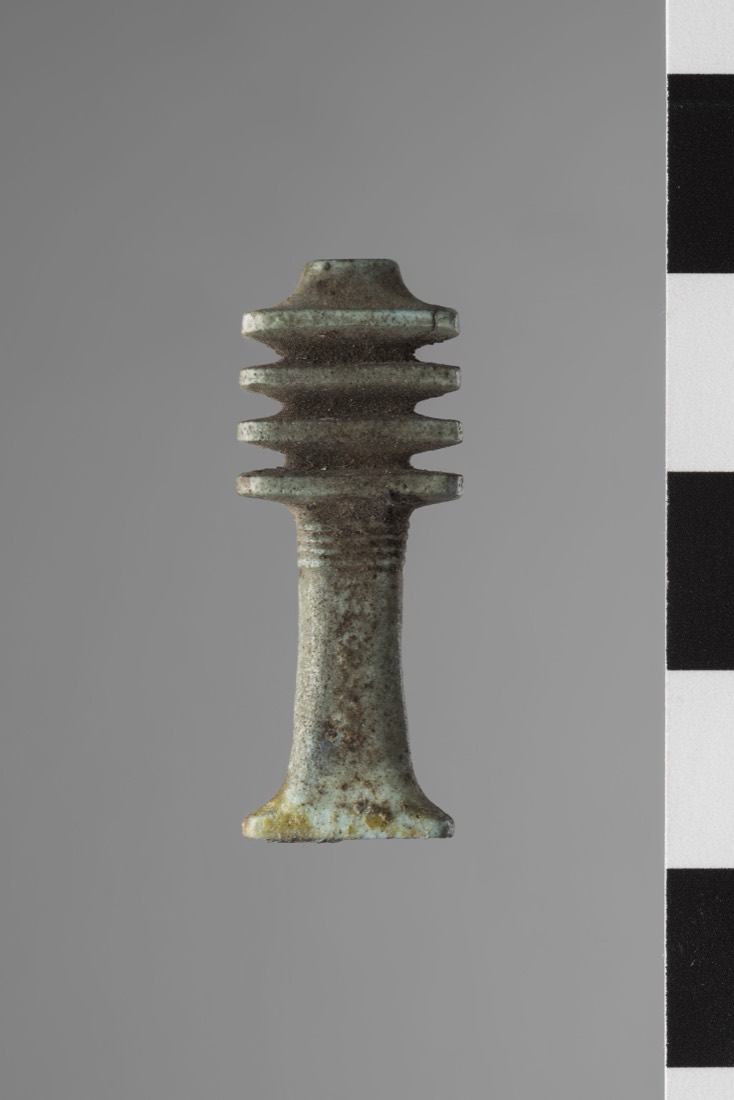


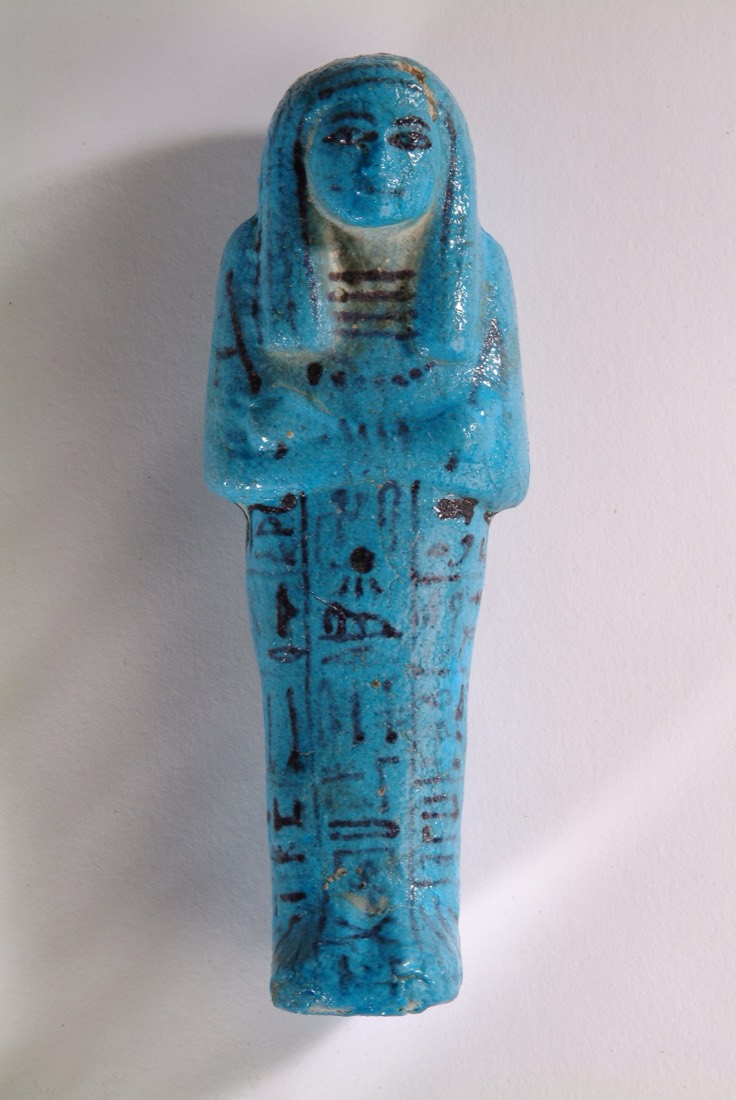
If this is your line: The wedjat for healing, the scarab for the heart, the djed for a bad back and a worse year.
Mesopotamia and the Levant
c. 2500 – 300 BCThe Assyrians and Babylonians were the first to write their protections down and hang them up. Their world was full of named demons who did specific harm, and the answer to a named demon was its own image or its enemy's. Lamashtu, who killed babies and mothers in childbirth, was driven off by a bronze plaque showing her being expelled; the plaque was hung over the bed. Pazuzu, king of the wind demons and himself horrible, was worn as a head on a cord because he was Lamashtu's enemy, which is the oldest surviving example of the principle that you set a monster to catch a monster.


If this is your line: Pazuzu for the household with a sick child in it, and the hand for everything else.
Greece
c. 800 BC – AD 300The Greek word for it is periapton, 'a thing tied around'. Greek protection is largely about the face: the gorgoneion, the severed head of Medusa, was set on Athena's shield, over doorways, on roof tiles and on the bottom of drinking cups, because a face so terrible that it turns men to stone will certainly turn a glance aside. The eye-cup is the joke and the defence together: you raise it to drink and a pair of enormous eyes stares back over the rim at whoever is watching you.
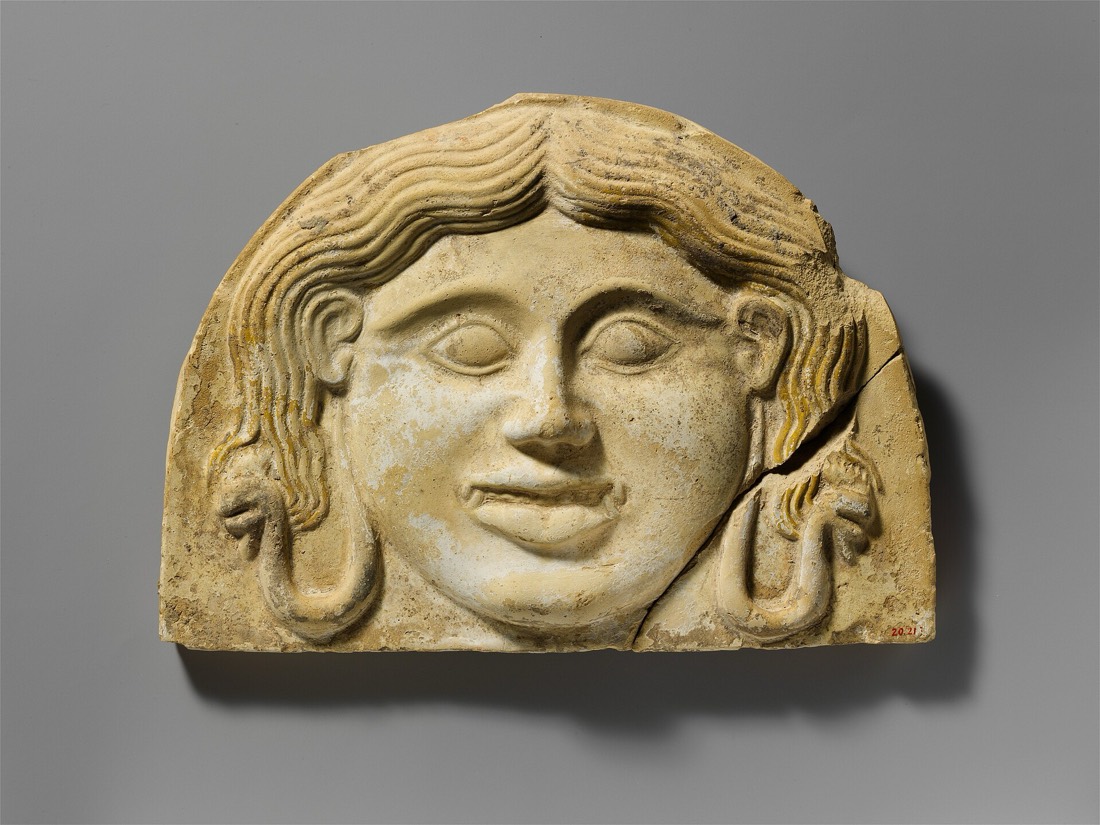


If this is your line: The gorgoneion at the door, and for a Greek, still the blue eye.
Rome
c. 500 BC – AD 400Roman children wore the bulla, a locket of gold for the freeborn and leather for the poor, from birth until the day they took the toga of manhood and dedicated it to the household gods. Inside was a fascinum, a phallus, because the Romans held that the way to defeat the invidious eye was to make it laugh: laughter breaks the stare. Phalluses were carved on bridges, worn as pendants, hung with bells as wind-chimes over shop doors. The most Roman object in this entire catalogue is a bronze phallus with wings, legs, a tail and five bells, hung in a doorway in Pompeii.


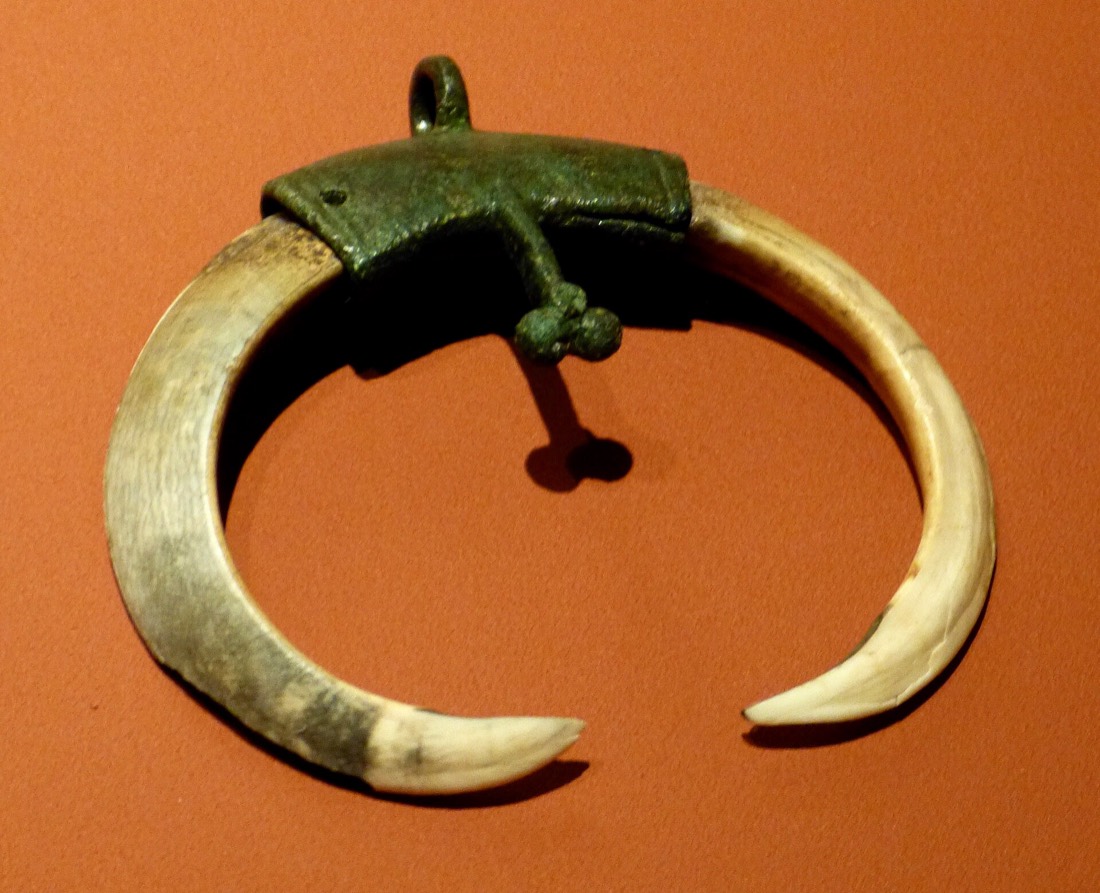

If this is your line: The bulla for a child; the crescent for a daughter; a bell over the shop door.
The Jewish world
c. 700 BC – presentJewish practice draws a hard line between what is commanded and what is folk custom, and amulets live on both sides of it. The mezuzah on the doorpost and the tefillin on the arm and forehead are commandments, containing scripture, and are not amulets in the strict sense, though their protective reputation is ancient and universal. Beside them grew the kame'a, the written amulet: parchment inscribed with divine names, angelic names, and psalms, rolled into a silver case and hung on a child or a woman in labour. The Talmud already argues about which are permitted. The hamsa, the open hand, is shared with Islam and older than both.


If this is your line: The hamsa on the wall of a new house; the kame'a for a newborn.
The Islamic world
AD 700 – presentOrthodoxy is wary of amulets and unambiguous about the eye: the Prophet is reported to have said that the eye is real. So the licit protection is the word of God itself. Verses are worn: the Throne Verse, the Verse of the Chair, the two final suras called the Mu'awwidhatayn, 'the two of taking refuge', written small and folded into a silver case, or written large on a shirt worn under armour. Alongside it runs the older Mediterranean stock: the blue bead, the hand of five, the fish, the scorpion.



If this is your line: The khamsa, and a written verse in silver for a traveller.
Christendom
AD 300 – presentThe Church's official position has been that a blessed object is a sacramental and not a charm, and that the difference is whether you trust God or the object. In practice the line has never held for a moment. The Agnus Dei, a disc of wax from the paschal candle stamped with the Lamb and blessed by the Pope, was carried against fire, flood, storm, plague and sudden death. The medal of St Benedict carries an exorcism in the initials of a Latin verse around its rim. St Christopher goes in the car. The Caravaca cross, the brown scapular, the miraculous medal: a whole industry of the blessed and the worn.

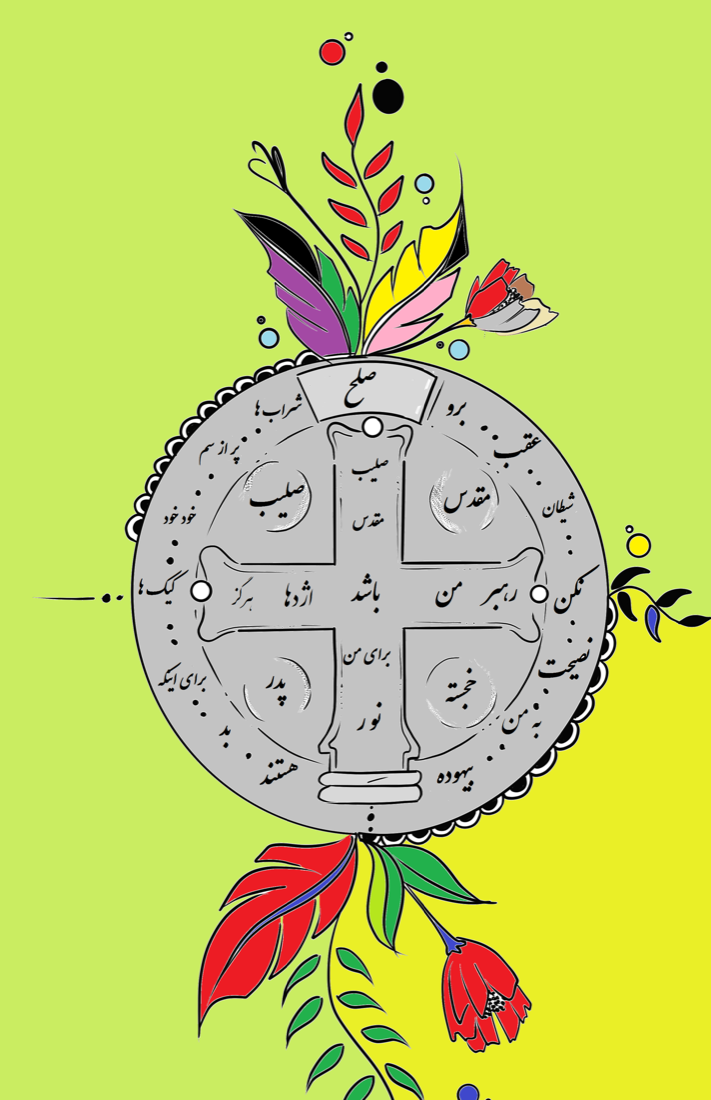


If this is your line: A saint's medal for the one you actually pray to; the Benedict medal for the house.
The Norse and the Germanic North
c. AD 400 – 1200When Christianity came north, Scandinavian smiths began casting Thor's hammer and the cross in the same mould, and men wore both. Mjölnir is the amulet of the hammer that always returns: worn at the neck in silver, and invoked at weddings and burials to hallow the ground. Older still are the gold bracteates, thin stamped discs copying Roman medallions, which carry the earliest runic charm formulas: alu, laukaz, laþu, words for ale, leek and invitation, whose exact force is still argued over.
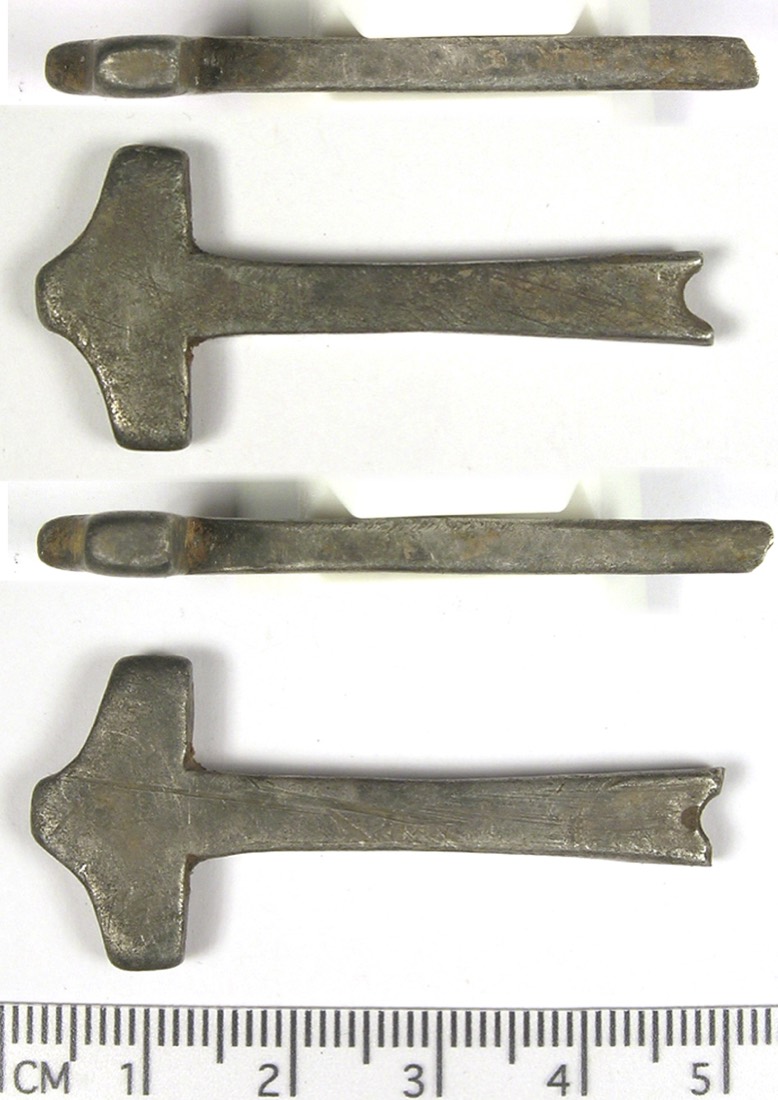


If this is your line: Mjölnir, for a man who wants the oldest thing on this page that is still made.
The Slavic lands
c. AD 800 – presentPerun, the thunder god, kept his axe as Thor kept his hammer, and small lead and bronze axes hang from Novgorod to Kyiv. Slavic folk protection is dense with the domestic: the house spirit to be fed, the red thread on the wrist, embroidery patterns whose geometry is protective and worn at the collar and cuff because those are the openings where harm gets in. Nothing in this catalogue is more consistent across cultures than the idea that the edges of clothing are where a person leaks.


If this is your line: The axe, and a red thread that costs nothing and is worn by half the world.
Italy and the South
Roman – presentSouthern Italy never stopped. The cornicello, the twisted red horn, hangs from every mirror in Naples; the mano cornuta and the mano fica are made with the fingers behind the back when someone says something unlucky; and the cimaruta, the sprig of rue cast in silver and hung over a cradle, carries on its branches a key, a crescent moon, a serpent, a rooster, a hand, a heart and a flower, each a separate defence, so that a single object covers every base at once. It is the most compressed amulet in this whole catalogue.


If this is your line: The horn on the mirror; the cimaruta over a cot.
Britain and Ireland
Iron Age – presentBritish folk protection is a domestic archaeology: dried cats and worn shoes in chimneys and under thresholds, witch-bottles of urine, nails and hair buried at the door to turn a curse back on its sender, and apotropaic 'witch marks' scratched into oak beams and stone jambs beside every opening in the house. The commonest mark is a daisy-wheel compass-drawn in a single unbroken line, or the double V of Virgo Virginum, the Virgin of Virgins. They cluster around doors, windows and hearths, because those are the three ways in.

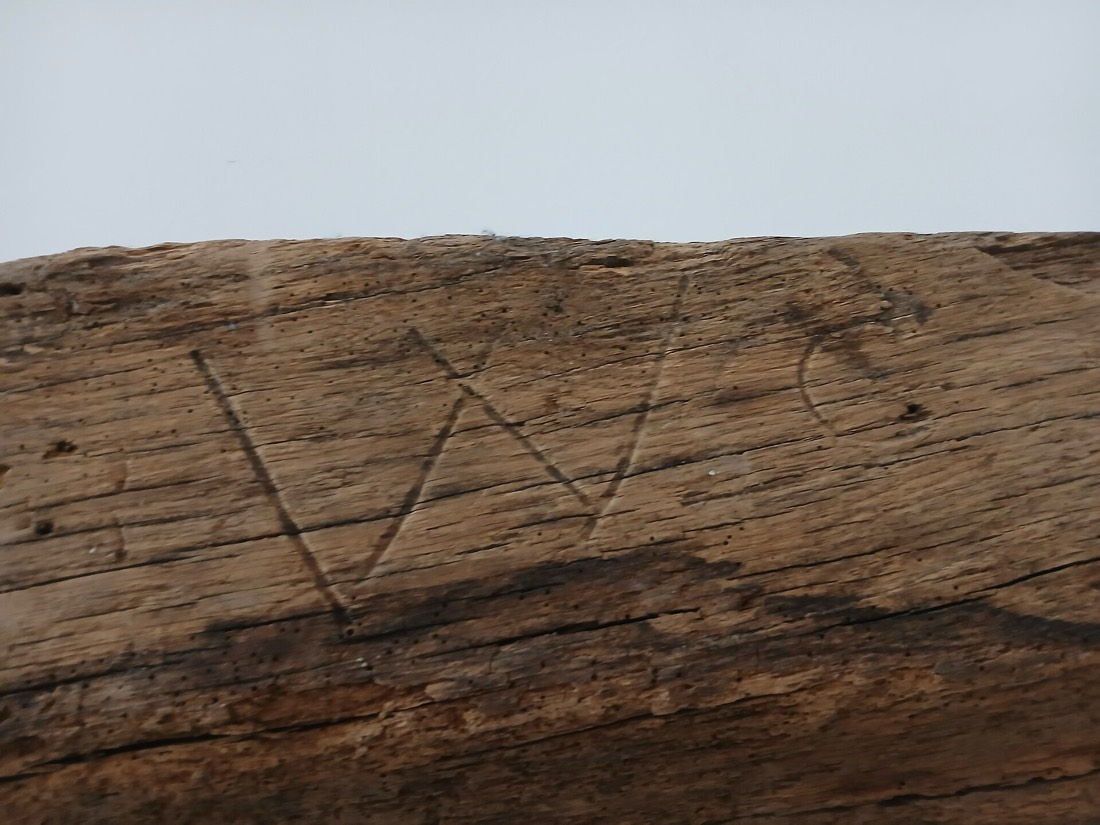


If this is your line: The horseshoe over the door, points up; a witch mark by the hearth if you own the beams.
The Romani
c. AD 1000 – presentRomani protective practice is oral, portable and jealously private, which is why the printed record is thin and mostly written by outsiders. What survives in the nineteenth-century collections is a grammar of knots, threads, coins, and drawn signs, much of it turning on the same two ideas that run through this whole page: that the edges of a person must be closed, and that the envious look must be given something else to land on.
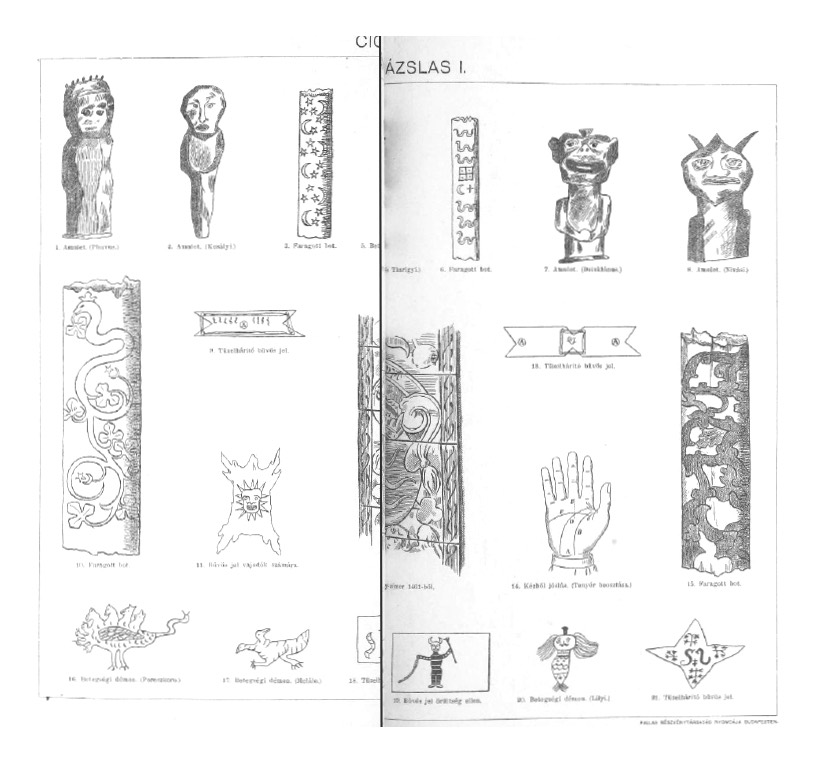
If this is your line: Red thread, a pierced coin, and nothing you would care to explain to a stranger.
The German lands and the Alps
Medieval – presentThe Alpine speciality is the Breverl: a small packet of folded paper, printed with saints, seals, crosses and abbreviations, containing scraps of blessed herb, salt, wax and written prayer, folded into a many-layered lozenge and sewn into a cloth or leather case. It is the most information-dense amulet in Europe, a whole shrine folded into a wallet, and it was carried by soldiers, travellers and pregnant women. Beside it: the Himmelsbrief, the 'letter from heaven', a printed sheet promising that whoever carries it will not be shot, drowned or burned.


If this is your line: A Breverl, if you want the most thoroughly built paper object in Europe.
Spain, Portugal and Latin America
Medieval – presentThe Iberian world carried its amulets across the Atlantic and fused them with what it found. The higa, a fist with the thumb between the fingers, is worn in jet, coral and silver from Galicia to Brazil, given to babies against the mal de ojo. Milagros, little stamped metal limbs, hearts, eyes and animals, are pinned to a saint's robe for a specific cure, which makes them the mirror image of an amulet: not worn against the harm but left behind after it.


If this is your line: A higa for a baby; a holed stone if you find one, because you cannot buy the finding.
West and Central Africa
Ancient – presentThe nkisi of the Kongo is not worn but kept: a figure containing a packet of consecrated medicine, activated by driving in a nail or a blade at the moment of an oath, so that the object accumulates a visible history of every promise made on it. It is protection as contract. Elsewhere in West Africa the gris-gris, a small leather packet of written verse and material, sits at the exact point where Islamic written magic met older practice, and is worn from Senegal to Nigeria.


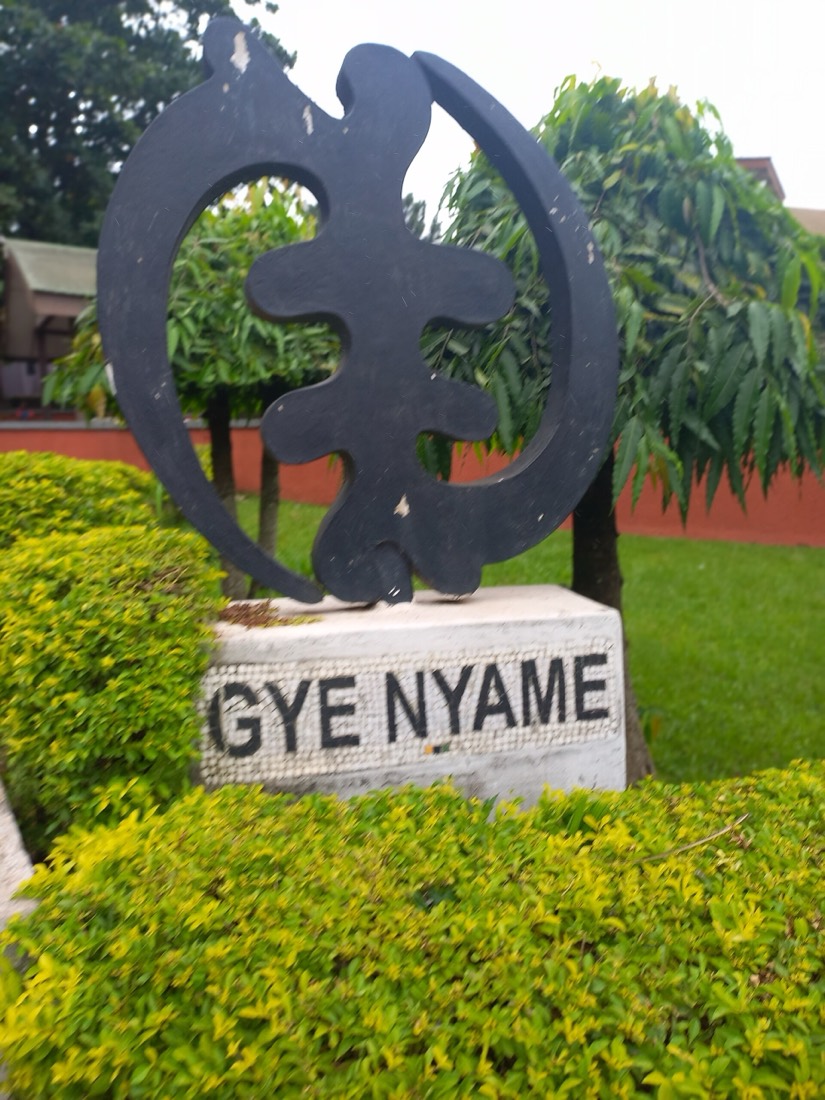
If this is your line: A leather-cased written charm, which is the same object as the Jewish kame'a and the Alpine Breverl.
India and the Himalaya
Ancient – presentThe Indian amulet is often a container: the tabiz or taviz, a tube of silver or copper holding a written mantra or verse, tied on a black thread at the neck, the arm or the waist of an infant. Black thread itself is the commonest protection in South Asia, along with the kajal spot smudged on a baby's cheek to spoil its perfection, since the eye is drawn to what is flawless. In Tibet the ga'u is a hinged travelling shrine worn on the chest, holding a blessed image, a relic, or a printed prayer.


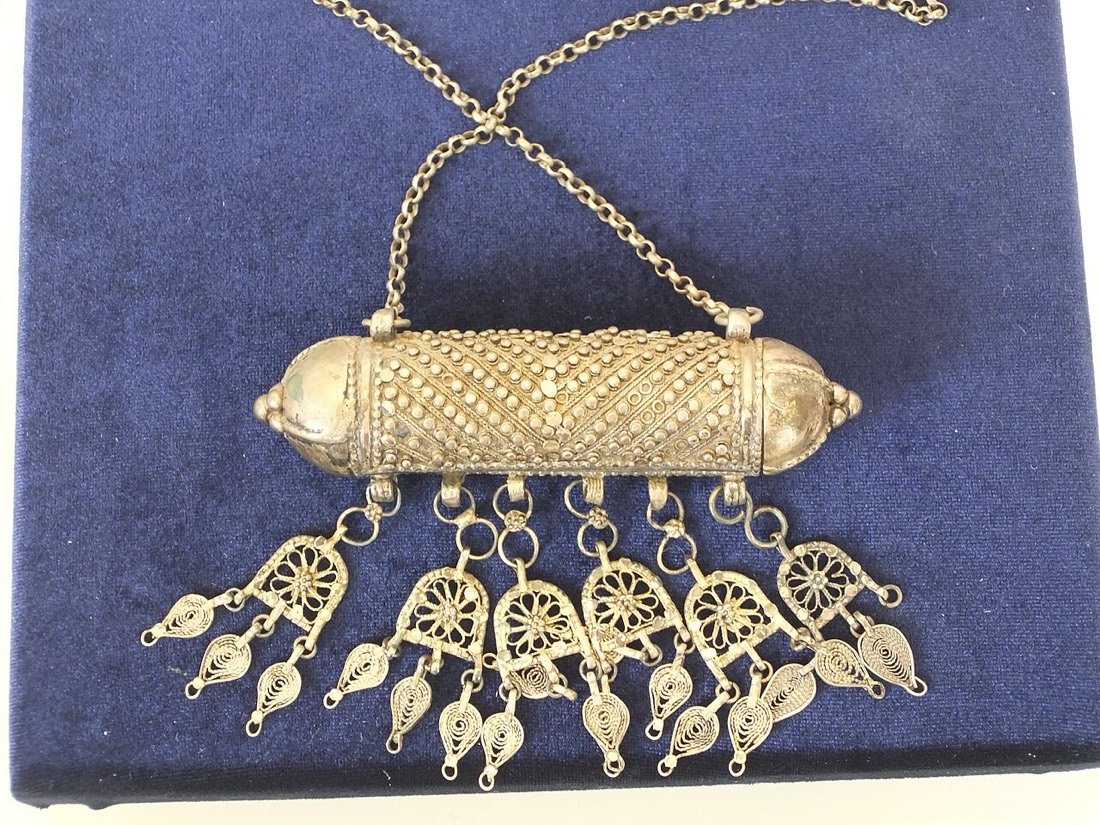
If this is your line: A silver tube on a black thread, and a deliberate flaw somewhere on anything perfect.
China
Ancient – presentChinese protective practice runs on two tracks: the written charm, fu, drawn in cinnabar on yellow paper in a script legible only to spirits, burned and drunk in water or pasted over a door; and the worn object, above all jade, which the Chinese have carried for eight thousand years as the substance that preserves. Coins strung with red cord, the bagua mirror over the door, and the peach-wood sword all belong to the same system: a bureaucratic universe in which the correct document, correctly stamped, is binding on the spirit world.
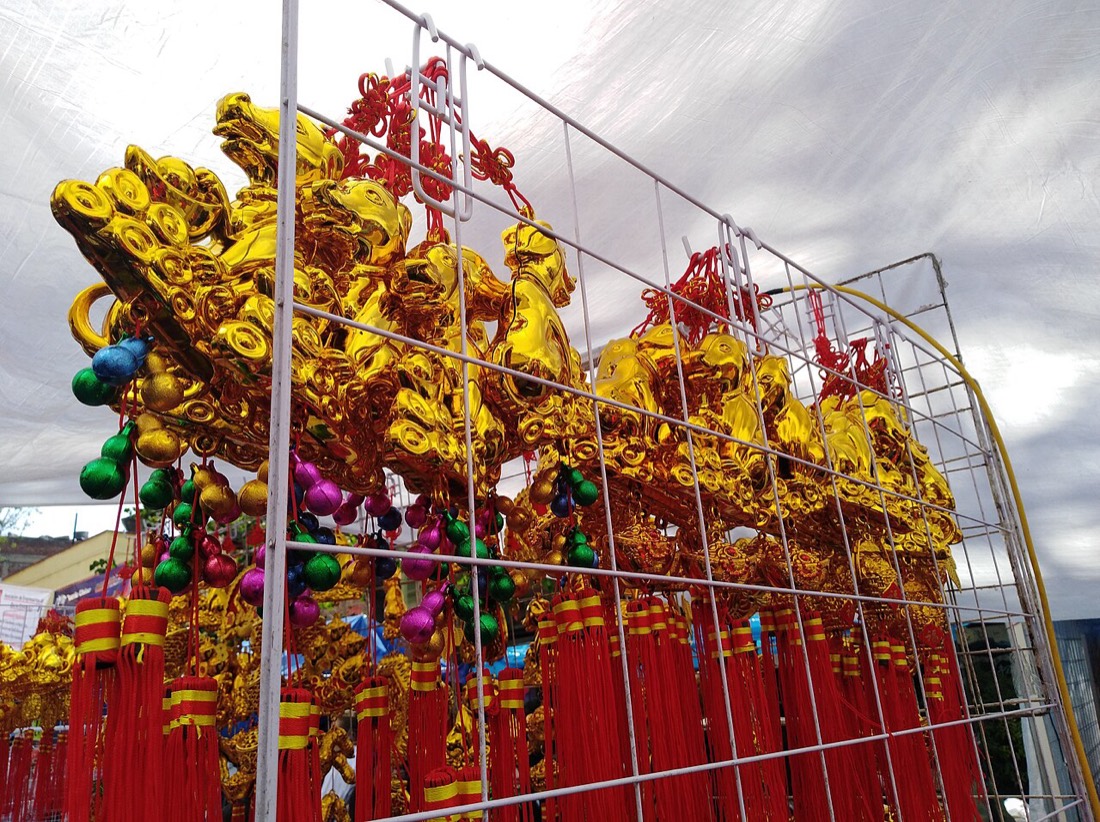


If this is your line: Jade, worn against the skin, which is the oldest continuous amulet tradition on earth.
Japan and Korea
c. AD 600 – presentThe omamori is a printed prayer or a slip of blessed wood sealed inside a brocade bag, sold at shrines and temples for a specific purpose: safe childbirth, success in examinations, traffic safety, recovery from illness. It must not be opened, it is renewed each year, and the old one is returned to the shrine to be burned. It is the most systematised amulet in the modern world, and quite possibly the best-designed: it names its purpose on the outside and expires.


If this is your line: An omamori for the purpose you actually have, and return it in a year.
Native America and the Pacific
Ancient – presentGrouping these together is a convenience and not a claim: the practices are unrelated. The Northwest Coast amulet in bone and ivory, the Andean tumi, the Maori hei-tiki in nephrite passed down a family until it carries the names of its dead owners, the bear-claw necklace: what they share with everything else on this page is only the underlying human proposition, that a thing carried can stand between you and what is coming.
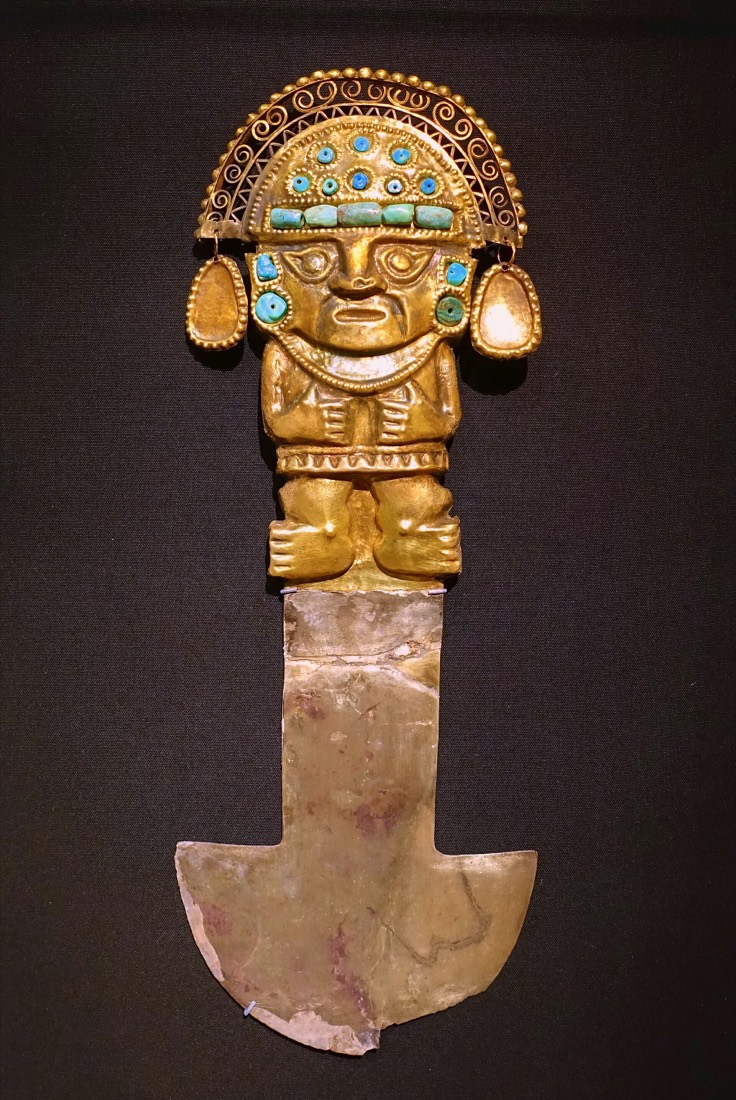


If this is your line: Nothing from this section, unless it is yours by descent. That is the point of it.
Persia and Central Asia
Ancient – presentPersian protection is textile and metal together: the blue bead, the <i>cheshm-e nazar</i>, and above all esfand, wild rue seeds burned on charcoal so the smoke passes over a person's head while a rhyme is said against the eye. The smell of it is the smell of a Persian house on a day when something good has happened and somebody is nervous about it. Across the steppe, Kazakh and Kyrgyz work hangs silver, coral and carnelian in heavy plates on a woman's chest and headdress, where it both announces wealth and, by the shine, absorbs the glance that wealth attracts.

If this is your line: Blue glass, and esfand smoke, which costs nothing and is the most Persian thing in this catalogue.
Carthage and the Punic world
c. 800 – 146 BCThe Phoenicians and Carthaginians carried Egyptian forms across the whole Mediterranean and sold them everywhere they traded, which is why a wedjat eye turns up in a grave in Ibiza. Their own speciality was the glass-paste pendant head: a bearded, grinning, staring face in coloured glass, hung at the neck, found from Sardinia to Cádiz. It belongs squarely to the inversion principle — a face so odd that the eye stops on it.

If this is your line: A glass face, if your line runs to the western Mediterranean.
Ethiopia and the Horn
AD 400 – presentThe Ethiopian magic scroll is made to the length of its owner's body, so that it covers them entirely: strips of parchment from a goat sacrificed for the purpose, painted with angels, guardian eyes, and text in Ge'ez naming the affliction and the remedy, then rolled into a leather case and worn or hung at the bed. The scroll is written by a debtera, a lay cleric outside the priesthood, for one named person, against one named trouble. It is the most personalised amulet made anywhere.
If this is your line: A scroll cut to your own height, which is the one measurement no shop can guess.
The Philippines and maritime Southeast Asia
Pre-colonial – presentThe <i>anting-anting</i> is a Filipino amulet, usually a cast brass or silver medallion crowded with Latin-looking abbreviations, a triangle, an eye, and a figure called the Infinito Dios: Spanish Catholic iconography reassembled into something the friars would not have recognised. They are traditionally recharged at Easter, on Good Friday, at a river or a mountain, and are associated with strength, invulnerability, and the revolutionary societies that fought the Spanish and then the Americans wearing them.

If this is your line: An anting-anting, and you are supposed to take it to water at Easter.
Greece, the Balkans and the Orthodox world
Byzantine – presentOrthodox practice keeps a live tradition of the small blessed object: the <i>filakto</i>, a cloth pouch holding incense, a fragment of blessed bread or oil-soaked cotton from a saint's lamp, sewn shut and pinned inside a baby's clothes. Alongside it, unbroken since antiquity, the blue eye, the <i>mati</i>, and the ritual of <i>xematiasma</i> — the reading of oil dropped into water to tell whether the eye has struck, performed by a specific relative who was taught the words in secret and may only pass them on once.
If this is your line: A filakto pinned inside the clothes, and someone in the family who knows the oil words.
France and Provence
Medieval – presentThe French countryside kept a dense practice of the <i>brevet</i> — the same folded, sewn paper packet as the Alpine Breverl — alongside pilgrimage badges from Compostela and Rocamadour, medals of the Virgin, and, in the south, a direct inheritance from Roman Arles and Marseille where Isis and Cybele were worshipped for centuries. The Camargue and the Sundgau museums hold trays of amulets against cholera, against fever, against the wolf.


If this is your line: A brevet, or a pilgrimage medal from a shrine you actually walked to.
Soldiers, sailors and the modern world
1800 – presentThe twentieth century did not end the amulet; it industrialised it. The Wellcome collection holds trays of charms carried by soldiers in the First World War: black cats, touchwood figures, coins, lucky farthings, a bullet that missed, a scrap of a mother's dress. The men who carried them had machine guns and gas masks and carried them anyway. Sailors tattooed a pig on one foot and a rooster on the other, on the theory that neither animal can swim and both would therefore carry a drowning man to shore.


If this is your line: Whatever you already have in your pocket and would not throw away. That is your amulet, and it is doing its job.
VIBy Purpose
Cut the same material the other way and it sorts into a dozen anxieties, which turn out to be the same dozen everywhere. What follows is the whole of human fear, in the order in which people historically worried about it.
Childbirth and the newborn
The single largest category in every culture on earth, because until a century ago it was the most dangerous thing most people did. Egypt: Bes and Taweret at the bed. Mesopotamia: the Lamashtu plaque. England: the eaglestone bound to the thigh, removed the instant the child was born. Italy: the cimaruta over the cradle. India: the black thread and the smudge of kajal. Everywhere: red.
The evil eye
Envy, made physical. Answered by a rival eye (the nazar), by an obscenity (the fascinum, the fig, the horn), by a shine that catches the glance first (silver, mirrors, sequins), by a deliberate flaw so that nothing is perfect enough to be envied, or by spitting.
The threshold and the house
Doors, windows, hearths, thresholds. The horseshoe, the mezuzah, the bagua mirror, the witch mark, the concealed shoe, the bottle under the floor. A house is a body and its openings are wounds.
Travel
St Christopher, the ga'u, the traveller's Breverl, the written verse in silver. The amulet of the road is nearly always a container carrying words.
War
The talismanic shirt of Islam and of Habsburg Europe, the bulletproof Himmelsbrief, the trench charm, the rosary in the breast pocket. Nothing in the record is sadder or more universal.
Illness and plague
Amulets against cholera, against pestilence, against fever. The eaglestone, the peony root, the toadstone, the red coral. When medicine had nothing, this was not superstition instead of treatment; it was the only treatment there was.
The sea
Sailors carry more amulets than any other trade. The hippocampus, the caul of a newborn child (which was believed to prevent drowning and was sold to captains at high prices into the twentieth century), the tattooed pig and rooster.
Livestock and the harvest
The barn is protected exactly as the house is: marks on the beams, a holed stone hung on a nail over the byre, red thread on the tail of a cow at calving.
Love and fidelity
Here the amulet shades into the talisman and the charm, and I say so. A knot to bind, a lock of hair, a ring. Anything that draws rather than wards belongs to the other site.
The dead
The amulets that go into the grave, not onto the living: the heart scarab, the jade suit, the coin for the ferryman, the jaw of a relative worn on a cord in the Andaman Islands. The dead are protected too, and from me as much as for me.
VIIThe Materials, and Why Each
Nothing in this tradition is arbitrary. Every material earned its place by a property you can verify with your hands.
Silver
The moon's metal, and the one that visibly tarnishes and can be brightened again, which is why it reads as a thing that takes harm on your behalf. Nearly every written amulet in the Mediterranean is cased in it.
Iron
Cold iron: the metal of the smith, hostile to fairies and to the dead across the whole of northern Europe. The horseshoe is iron first and horseshoe second.
Coral
Red, and grown in the sea: alive and not alive. Hung on Italian and Spanish babies for two thousand years, and painted onto Renaissance Christ children by Piero della Francesca and Mantegna.
Jet and amber
Both light, warm to the touch, and electrostatic when rubbed. Both worn against harm since the Stone Age, in Whitby and in the Baltic respectively.
Blue glass
The colour of the eye that is answering the eye. The Egyptian faience blue and the Turkish nazar blue are the same idea five thousand years apart.
Bone, tooth and claw
The weapon of a dangerous animal, taken and worn. The single oldest amulet formula in the human record.
Written parchment
The commonest amulet in the world once literacy exists: the word, folded, cased, and never read again.
Rue, garlic, iron filings, salt
The perishable half of the tradition, and therefore the half that has mostly vanished from museums while surviving in kitchens.

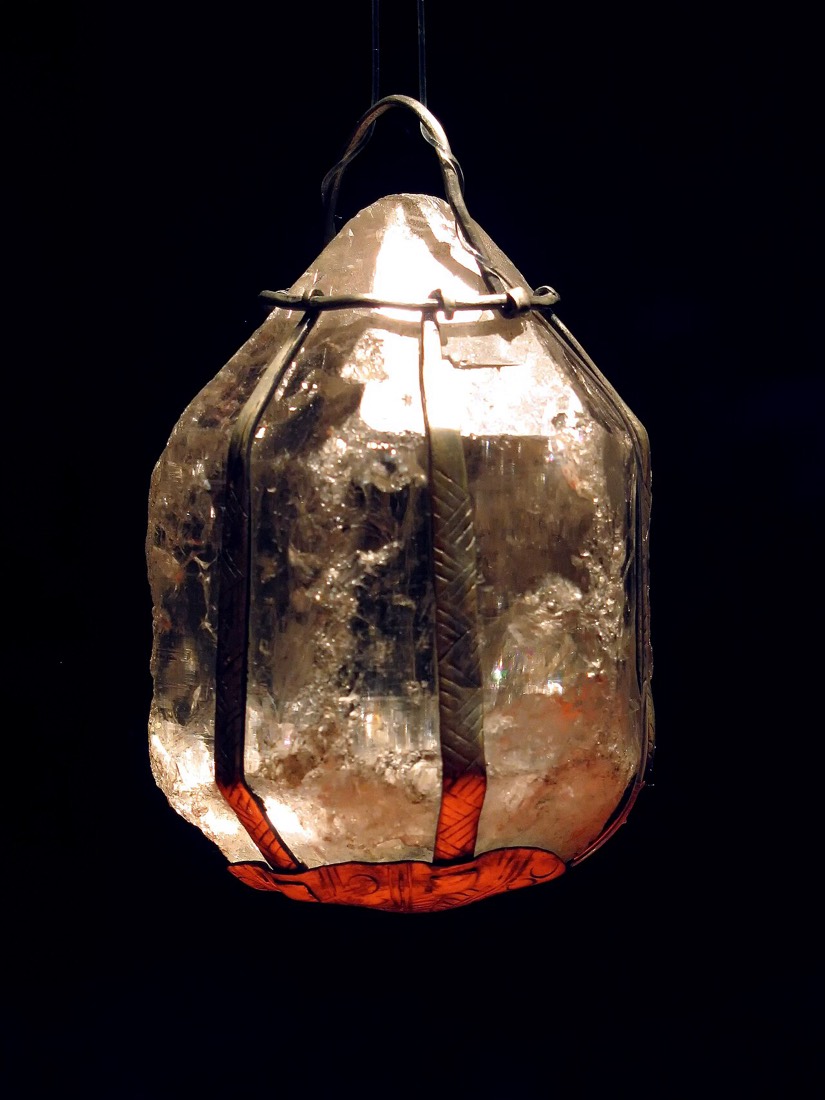
VIIIFrom the Cases
A last walk through the museum drawers: objects that did not fit a single tradition or a single purpose, which is most of them. Each one is a person's fear, given a shape and worn.


IXWhat I Make
I have made instruments for spirit communication for twenty-three years under the name Paranormal Products, and amulets alongside them for as long. The problem with the amulet market is not that the objects are cheap; it is that they are wrong. The hamsa sold in ten thousand shops is a flat stamping copied from a photograph of a copy. The Mjölnir is a cast of a cast, with the wire ornament gone soft. The nazar is pressed plastic. The Egyptian pieces are resin. Nobody looks at the museum original, because the museum original is harder.
I look at the museum original. I cast from documented finds, I fire real faience in a real kiln, I raise silver cases by hand, I solder every link, and where a tradition says the thing must be made at a certain time or by a certain method, I follow it or I tell you plainly that I did not. And for the commission below that matters most, I do the research first and hand it to you bound, so you own the provenance of your own protection.