Cimaruta (sprig of rue)
Meaning
The cimaruta ('sprig of rue') is a silver branch of the herb rue, a plant said to repel the evil eye and witches. Each tip carries its own charm: a key, heart, crescent moon, fish, flower, hand, horn, rooster, dagger or siren. It gathers a whole protective arsenal onto one stem.
Intent
It was pinned to babies' clothing or hung over cradles in Naples to protect infants from jettatura and illness. Some modern writers link it with the goddess Diana and witchcraft, but evidence for that reading is thin.
Significance
It is the most complex single amulet in Europe and uniquely Neapolitan. Collectors such as Frederick Elworthy (The Evil Eye, 1895) made it famous, and it has become a symbol in modern Italian folk magic and Wicca.
History
Cimarutas were made in Naples and Campania mainly in the 18th and 19th centuries, declining in the early 20th. Rue as a protective herb goes back to Pliny.
Making yours
5–8 cm flat cast silver. Three main branches with small attached charms, cast in one piece.Mediterranean & Iberian Folk: the tradition
Southern Italy and Spain kept the Roman fight against the evil eye going without a break. In Naples the belief in jettatura, the unlucky glance, was taken seriously enough that 19th-century gentlemen made the horns sign in their pockets; Nicola Valletta's Cicalata sul fascino volgarmente detto jettatura (1787) is its classic text. Spanish children wore belts hung with jet higas, crystal, coral and chestnuts. Walter Leo Hildburgh collected thousands of these amulets in the early 20th century and gave them to the Victoria and Albert Museum, the Pitt Rivers and the Wellcome, which is why so many are in British museums today.
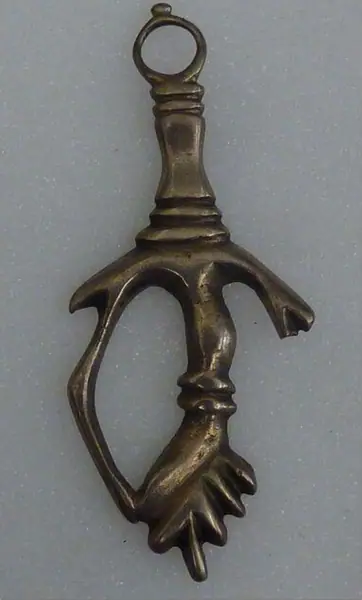 Silver amulet shaped like a branch ( cimaruta ), Naples (Italy), 1800-1899Naples · 1800-1899
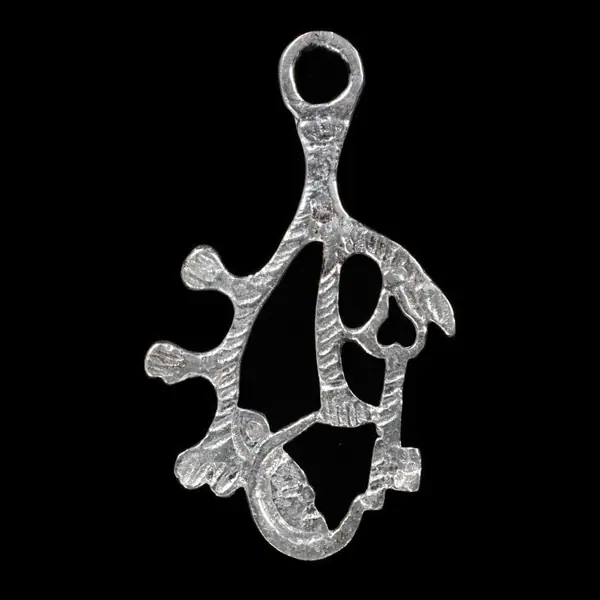 Silver amulet shaped like a branch with human attributes (cimaruta), Italy, 1850-1890Italy · 1850-1890
 Cimaruta - Elworthy
 Silver pendant amulet ( cimaruta ) shaped like a branch with a crescent moon, Italy, 1850-1899Italy · 1850-1899
 Amulet or cimaruta in the form of a rue branch
More from Mediterranean & Iberian Folk: Cornicello & horn amulets · Higas & figas (fig-hand) · Spanish child’s amulets (dijes & chupadores) · Neapolitan charms (sirena & others) · Other & unsorted Mediterranean
Every type in the gallery
Anything in the gallery can be made: any piece, any tradition, in its own material or yours, by hand from the documented original. Numbered. Price on commission, quoted before anything is made. I reply within one business day.