Luristan & Iranian bronze charms
Meaning
Luristan bronzes show a hero or 'Master of Animals' gripping beasts, along with ibexes, lions, demons and goddesses. Their imagery is about controlling the wild and dangerous forces of the mountains.
Intent
Worn as pendants or pinned to clothing, and dedicated at shrines as votive pins with disc heads, they sought protection, fertility and the favour of the gods. Many come from burials and shrine deposits.
Significance
They are among the most distinctive and most forged ancient bronzes; the art market flooded with them after the 1920s. Genuine excavated pieces from Surkh Dum and other sites give them context.
History
Luristan bronzes span roughly 1500–600 BCE, peaking in the Iron Age (c. 1000–650 BCE), from the Zagros mountains of western Iran. Their makers are uncertain, perhaps Kassite or Cimmerian-related herders.
Making yours
Lost-wax bronze with thick green patina. Pins run 10–30 cm with repoussé disc heads; pendants are 3–8 cm.Ancient Near East & Levant: the tradition
Mesopotamian protection grew out of a world crowded with named demons, each with a job: Lamashtu killed infants, the utukku haunted, fever demons struck. Exorcists (ashipu) wrote incantation series such as Maqlû and the Lamashtu texts, and amulets put those texts and images to work. Carved stone animal seals of the Uruk period (c. 3500 BCE) are among the oldest amulet-seals anywhere. In the first millennium BCE, Neo-Assyrian and Neo-Babylonian households hung Pazuzu heads and Lamashtu plaques. Phoenician traders spread Egyptianising amulets and glass faces across the Mediterranean, and in Sasanian Mesopotamia Jews, Christians and Mandaeans buried inscribed incantation bowls under their floors.
 Amulet from Parthian Empire (247 BCE–224 CE)Parthian Empire (247 BCE–224 CE) · 1–200 CE
 Votive PinIran, Luristan · early 1000s BCE
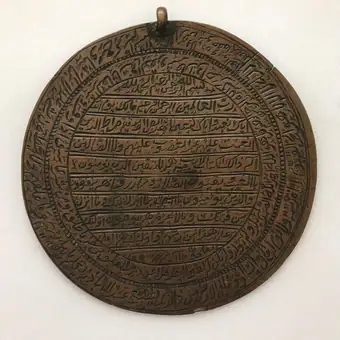 A brass circular amulet with engraved Arabic prayers, possibly IranIran · 1700-1800
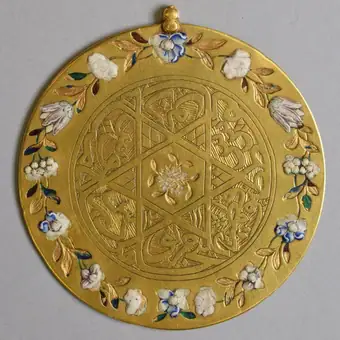 Amulet, gold, with engraved calligraphy on each face with floral enamelled borders, Iran, dated 1211 AH (1796 1796
 Leren halssnoer met twee amulettenNetherlands
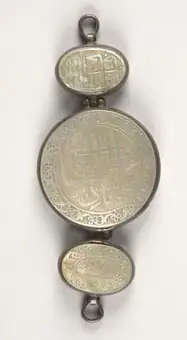 Armband (bāzūband) of three amuletsIreland
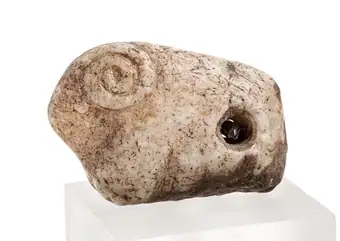 Amulett in Gestalt eines WiddersKarlsruhe
 Colier filigranat (corect Colier); colier amuletăAsia
 Jade amulet pendantIndia
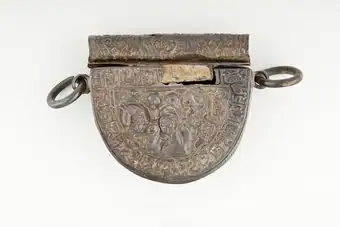 Amulet (image 2 of 2)11 th century date QS:P571,+1050-00-00T00:00:00Z/7
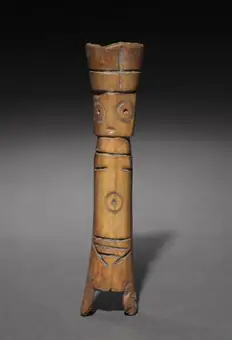 Amulet from Parthian Empire (247 BCE–224 CE)Parthian Empire (247 BCE–224 CE) · 1–200 CE
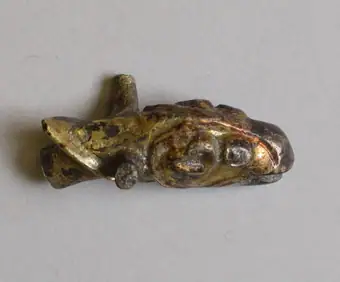 Amulet, Iran, 1800-1876Iran · 1800-1876
 Amulet, carved with Qur'an sura 114 (al-Nas)Ireland
 Carnelian amulet carved with protective verses from the Qur'anIndia
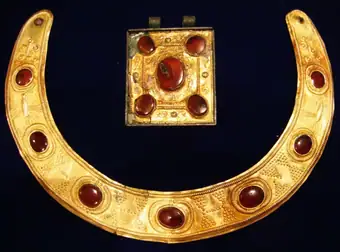 Samartian-Persian necklace and amuletNecklace and amulet: 1. century BC – 2. century AD Photo: ?
 Amulet quoting the Throne Verse from the Qur’anIreland
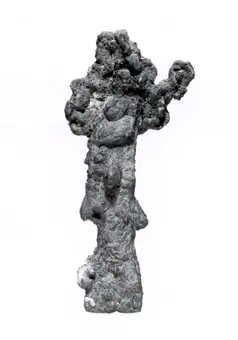 Fish amuletca. 9th century B.C.
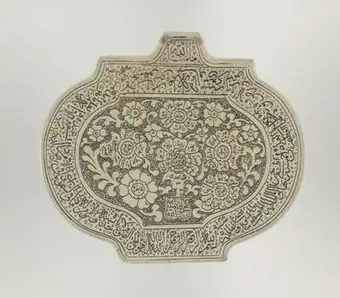 Amulet, with design of roses bearing holy namesIreland
 Iran sud-orientale, amuleto a forma di mosca, in steatite, AO 25209
 Khalili Collection Islamic Art tls 1911
 Luristan, amuleti, in bronzo, 1300-550 ac ca, AO 20739
 Brass hand, Iran, 1880-1925
 Magical mirror Louvre AA10
 Collectie Wereldmuseum, TM-1088-41, Amulet, 'Schedelamulet', voor 1937
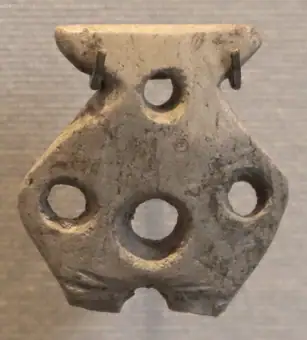 Giyan, amuleto a silhouette stilizzata con fori, in avorio, da tepe giyan, 2000-1000 ac ca, AO 15938
 Iran sud-orientale, amuleto a forma di uccello, in steatite, AO 26072
 Amulet5th–3rd millennium B.C.
 Amulet3rd millennium B.C.
 Amulet5th–3rd millennium B.C.
 Amulet
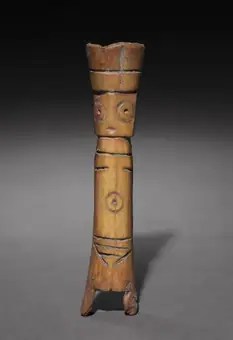 Amulet
More from Ancient Near East & Levant: Pazuzu heads & figures · Lamashtu plaques · Stamp-seal & animal amulets · Eye idols · Phoenician & Punic glass faces · Aramaic incantation bowls · Other & unsorted Ancient Near East
Every type in the gallery
Anything in the gallery can be made: any piece, any tradition, in its own material or yours, by hand from the documented original. Numbered. Price on commission, quoted before anything is made. I reply within one business day.