Andean illas & conopas
Meaning
An illa or conopa is a small stone animal, usually a llama or alpaca, with a cavity in its back. It holds the enqa, the life force and fertility of the herd, given by the mountain spirits (apus) and Pachamama, the earth.
Intent
Herding families kept illas hidden and brought them out in ceremonies, filling the cavity with llama fat, coca leaves and chicha as offerings, to multiply the herd and protect it from disease and loss.
Significance
Illas show Andean religion's intimate relationship between people, animals and mountains, and they survived Spanish campaigns to 'extirpate idolatry' in the 17th century, when priests destroyed thousands. Many families still keep them.
History
Camelid effigies are known from pre-Inca and Inca times (Inca examples in gold, silver and spondylus shell, c. 1400–1532). Stone illas continued through the colonial period and are still made and used in Peru and Bolivia.
Making yours
4–12 cm carved basalt or alabaster (huamanga stone) alpaca with a round bowl in the back.The Americas: the tradition
In the Americas, protective and power objects belonged to the relationship between people, ancestors, animals and the land. Andean herders kept stone illas for the fertility of their flocks, Mesoamerican rulers wore green jade as breath and maize, Isthmian goldsmiths cast animal spirit-helpers, and Arctic and Northwest Coast shamans carried carved spirit charms. Catholicism, arriving from 1492, brought saints, milagros and the Iberian evil-eye tradition, which fused with Indigenous and African belief into new forms such as Ekeko, the Afro-Brazilian balangandã and Santería. Many Indigenous objects are sacred and some communities ask that they not be displayed or copied; the Zuni, for example, distinguish sacred fetishes from carvings made for sale.
 Amulette figurant un hippopotameBelgium
 Incantation bowl, Nippur, terracotta
 Chinese woodcut: Healing by invocation
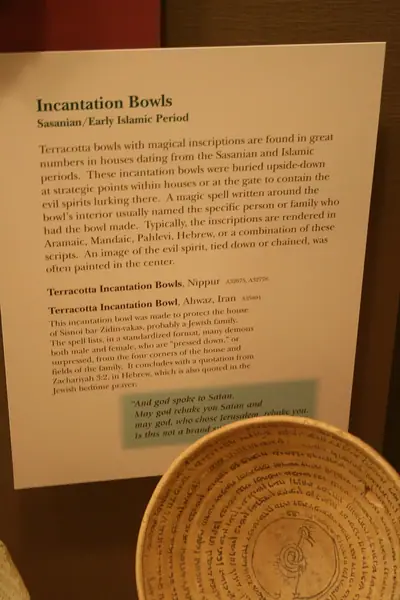 Incantation Bowls (10466278133)
 Chinese woodcut: Healing by invocation
 Incantation Bowl (10466092744)
 Witches putting a creature in a boiling cauldron. Lithograph after Biard.
 Incantation bowl, Ahwaz, Iran, terracotta
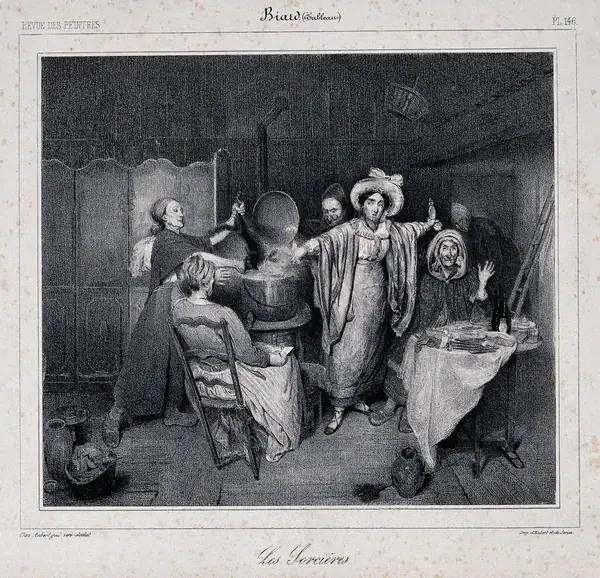 Witches putting a creature in a boiling cauldron. Lithograph after Biard.
 A witch casting spells over a steaming cauldron. Engraving by H.S. Thomassin after Demaretz.
More from The Americas: Isthmian & Colombian gold pendants · Mesoamerican jade & stone pendants · Taíno zemís & Caribbean amulets · Zuni & Pueblo fetishes · Umbilical amulets & medicine bundles · Northwest Coast & Arctic shaman charms · Milagros & ex-votos · Balangandãs, figas & Afro-Atlantic charms · Dreamcatchers · Other & unsorted The Americas
Every type in the gallery
Anything in the gallery can be made: any piece, any tradition, in its own material or yours, by hand from the documented original. Numbered. Price on commission, quoted before anything is made. I reply within one business day.