Magical gems (Abraxas, Chnoubis)
Meaning
Engraved stones with a strange cast of beings: the Anguipede (cock-headed, snake-legged god with whip and shield, often called Abrasax or Iao), the lion-headed snake Chnoubis, the womb as a vessel with a key, Harpocrates on the lotus, with Greek vowel strings, secret names and ring-signs (charaktêres) that had no ordinary meaning.
Intent
Each was made for a purpose: Chnoubis on green stone against stomach pain and for digestion, haematite 'womb gems' to regulate the womb and pregnancy, others for favour, victory, love or protection. The stone, the image and the words had to agree, as recipes in the Greek Magical Papyri explain.
Significance
Magical gems bridge Egyptian, Greek, Jewish and Christian magic, and show a written, learned magic practised by professionals across the Empire. They were collected in the Renaissance as 'Gnostic' gems, and the name Abraxas became a byword for hidden wisdom.
History
They were made from the 1st to the 4th century CE, mostly in Roman Egypt and the eastern Empire. Around 4,000 are known. Jean Chifflet published the first study in 1657, and Campbell Bonner's Studies in Magical Amulets (1950) founded the modern field.
Making yours
1–3 cm oval intaglios in haematite, green jasper, bloodstone or lapis. Wheel-cut, with lettering on the reverse and bevel.Greece, Etruria & Rome: the tradition
Greeks called amulets periapta or phylakteria, 'things tied on' and 'protectors'; Romans said amuletum or ligatura. Both cultures feared the envious glance, baskania in Greek and invidia or fascinatio in Latin, and answered it with laughter, shock and the power of images: the Gorgon's face, the phallus, the crescent moon. Children, brides, soldiers and livestock were the most protected. Graeco-Egyptian magicians of the Roman Empire engraved gems and gold foils with divine names and signs, forming a written magic that passed to Byzantium, Islam and medieval Europe. Pliny the Elder's Natural History (77 CE) records hundreds of amuletic stones, plants and animal parts, and became the source book for later lapidaries.
 Magical amuletChania
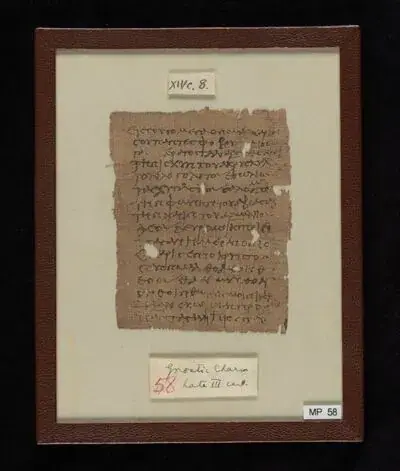 Charitesion (amulet)Egypt
 amuletăIsaccea
 Winkekatze als GlücksbringerGermany
 GNM - Gnostisches GoldamulettGermany
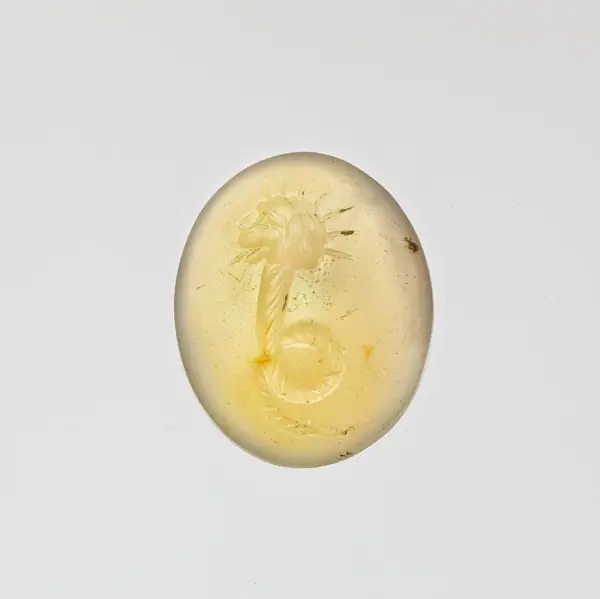 Chalcedony intaglio: Lion-headed serpentca. 2nd–3rd century A.D.
 Magical amulet Musée BnF AAbj4ancient Greece
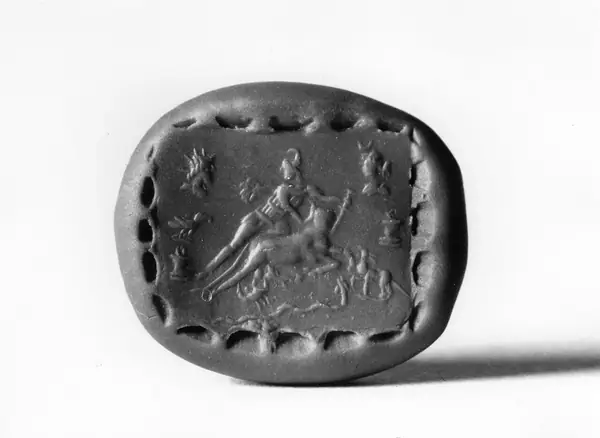 Amulet of Mithras Slaying the Bull, and the God Abraxas3 rd century date QS:P571,+250-00-00T00:00:00Z/7
 Carnelian intaglio: Lion-headed serpentca. 2nd–3rd century A.D.
 Steatite intaglio: Lion-headed serpentca. 2nd–3rd century A.D.
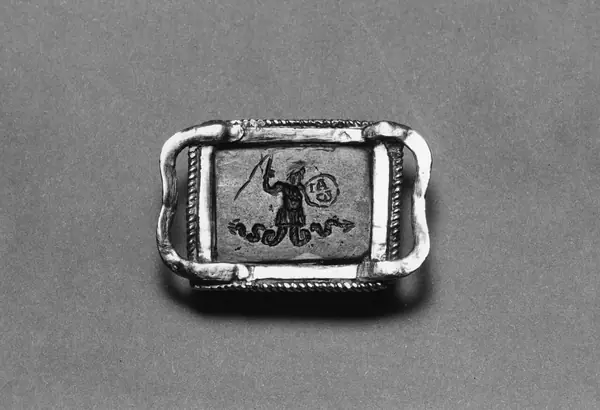 Amulet of Mithras Slaying the Bull, and the God Abraxas3 rd century date QS:P571,+250-00-00T00:00:00Z/7
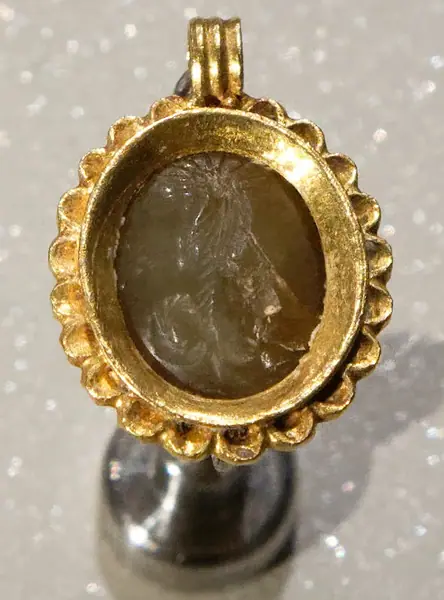 Intaglio Chnoubis Musée BnF deClercq3453
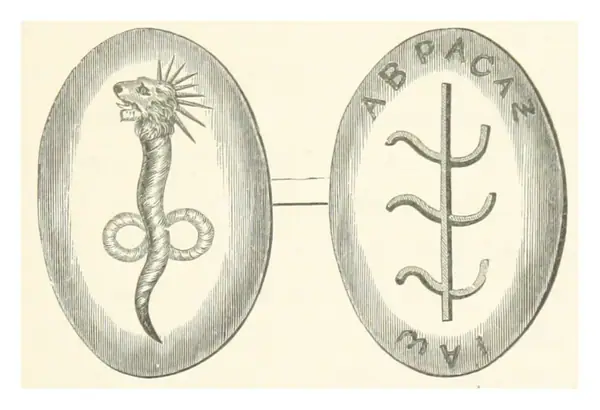 SMYTH(1851) 1.191 A Gnostic Abraxas
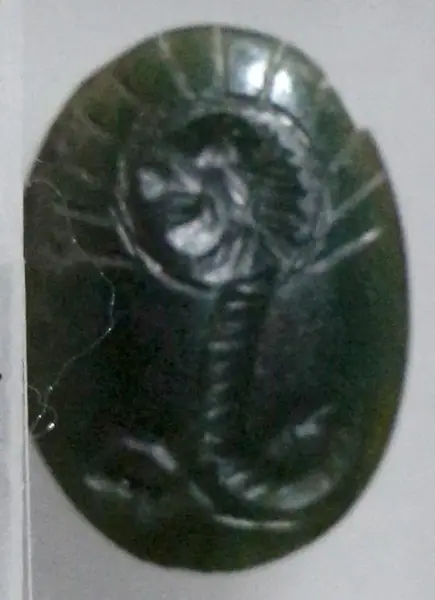 Età imperiale, gemma con chnoubis e iscrizione, II-IV secolo ca., in calcedonio - Copia
 Hekate with lion-maned serpent
 Ottův slovník naučný - obrázek č. 025
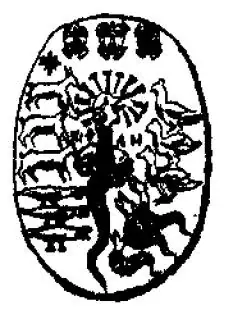 Abraxas
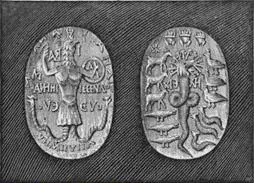 Abraxas3
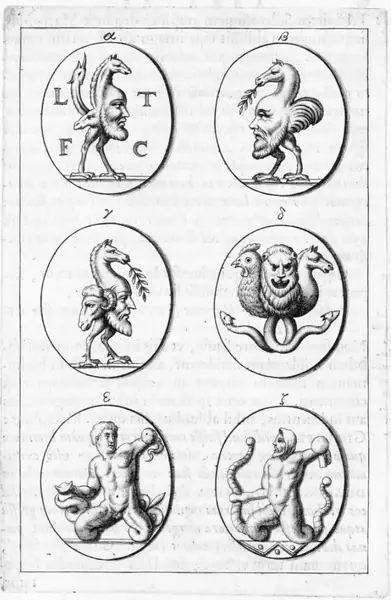 Abraxas seu Apistopistus - Talisman pg.037
 Abraxas seu Apistopistus - Talisman pg.050
 Abraxas seu Apistopistus - Talisman pg.052
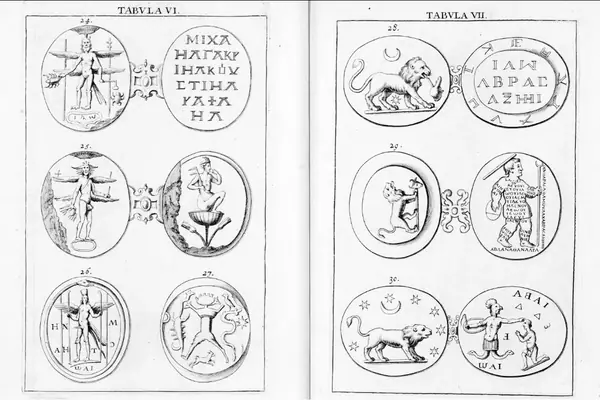 Abraxas seu Apistopistus - Talisman pg.054
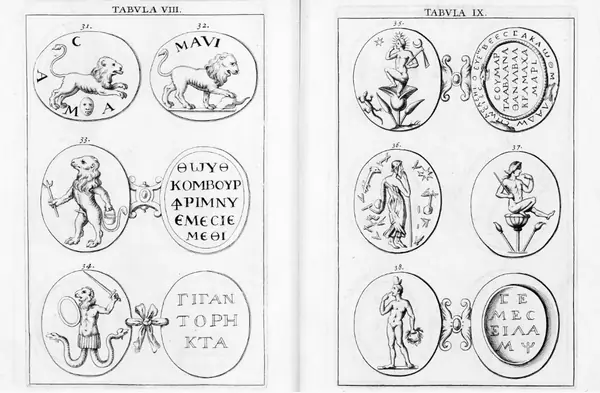 Abraxas seu Apistopistus - Talisman pg.056
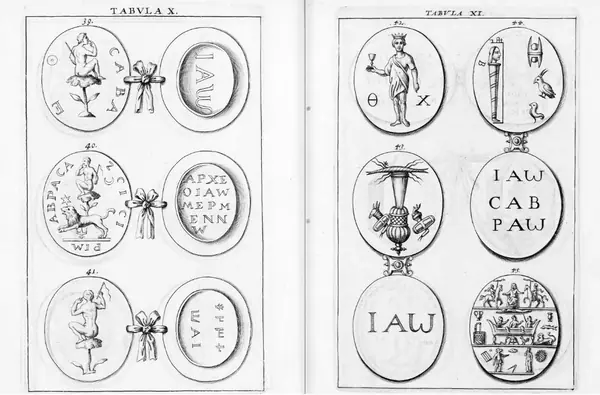 Abraxas seu Apistopistus - Talisman pg.058
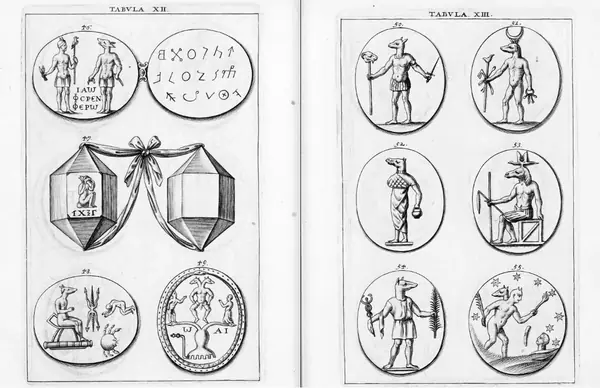 Abraxas seu Apistopistus - Talisman pg.060
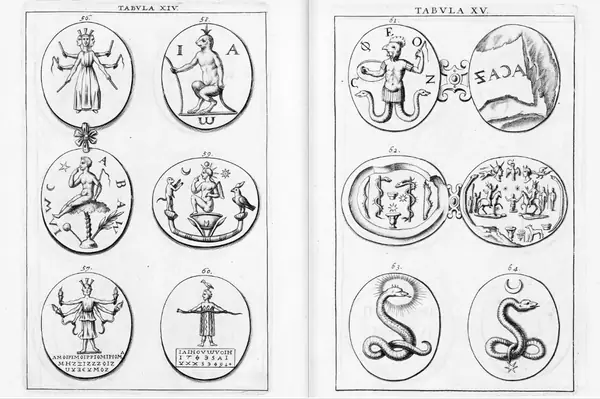 Abraxas seu Apistopistus - Talisman pg.062
 Abraxas seu Apistopistus - Talisman pg.064
 Abraxas seu Apistopistus - Talisman pg.066
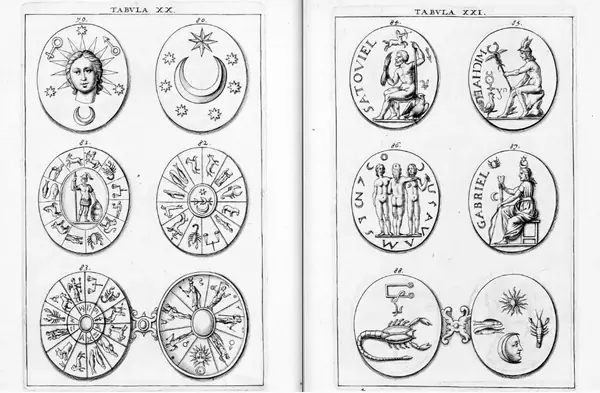 Abraxas seu Apistopistus - Talisman pg.068
 Abraxas seu Apistopistus - Talisman pg.070
 Abraxas seu Apistopistus - Talisman pg.072
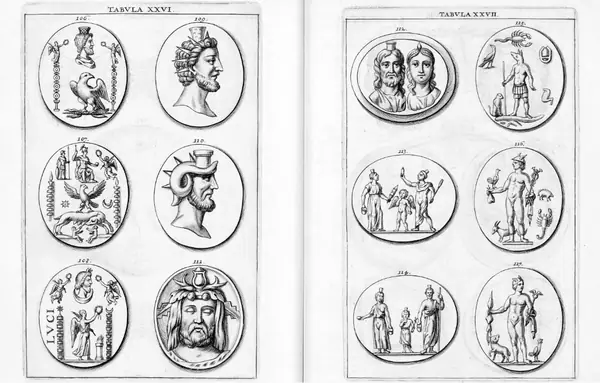 Abraxas seu Apistopistus - Talisman pg.074
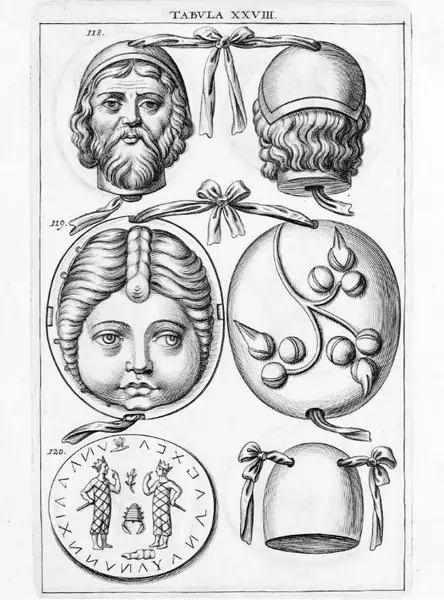 Abraxas seu Apistopistus - Talisman pg.076
 Abraxas seu Apistopistus - Talisman pg.49
 Brockhaus and Efron Jewish Encyclopedia e1 150-0
 Intaglio Chnoubis Musée BnF Schlumberger352
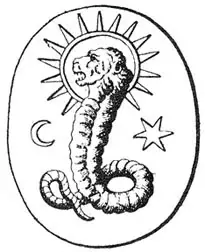 Lion-faced deity
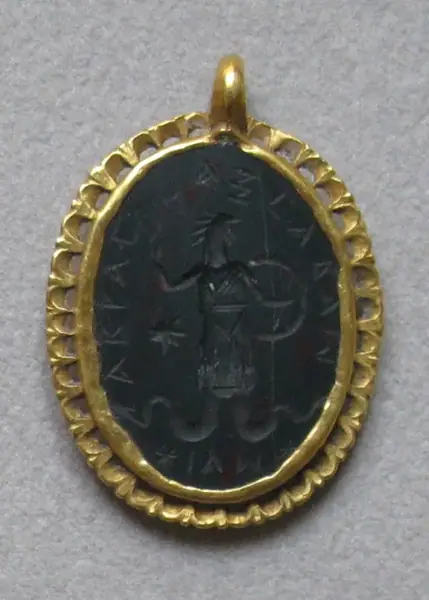 Arte romana, amuleto con dio aguipede e testa di gallo, diaspro sanguigno e oro, III sec
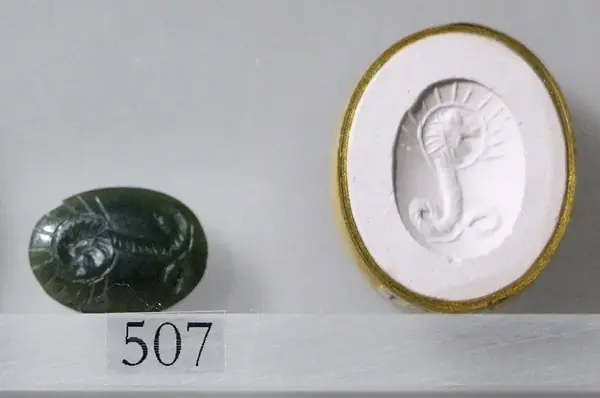 Età imperiale, gemma con chnoubis e iscrizione, II-IV secolo ca., in calcedonio
More from Greece, Etruria & Rome: Gorgoneion (Medusa head) · Bullae · Lunulae (crescent pendants) · Amulet capsules & gold lamellae · Anatomical votives · Herakles knots & Sabazios hands · Other & unsorted Greece
Every type in the gallery
Anything in the gallery can be made: any piece, any tradition, in its own material or yours, by hand from the documented original. Numbered. Price on commission, quoted before anything is made. I reply within one business day.