Gorgoneion (Medusa head)
Meaning
The gorgoneion is Medusa's severed head, whose gaze turned onlookers to stone. Perseus gave it to Athena, who set it on her aegis. It is the ultimate eye that looks back, a face so terrible that it petrifies evil. Over time it changed from a grinning, tusked monster to a beautiful, tragic woman.
Intent
It was placed on shields, breastplates, doors, roof tiles, drinking cups, jewellery and floors to repel enemies, evil spirits and the evil eye. Worn as a pendant, it made the wearer untouchable to harm.
Significance
It is one of the most widespread apotropaic images of antiquity and survives today in Sicily's flag (the trinacria), in Versace's logo and in modern art. It shows the principle of fighting evil with a greater terror.
History
The gorgoneion appears in Greek art in the 8th–7th centuries BCE, flourishes in the Archaic period (c. 600–480 BCE) with the grotesque type, and turns to the 'beautiful' Medusa from the 5th century BCE. Romans used it widely, and it passed into Byzantine and Renaissance art.
Making yours
Pendants 2–5 cm, often repoussé gold or cast bronze. Frontal face with snakes knotted under the chin, sometimes winged.Greece, Etruria & Rome: the tradition
Greeks called amulets periapta or phylakteria, 'things tied on' and 'protectors'; Romans said amuletum or ligatura. Both cultures feared the envious glance, baskania in Greek and invidia or fascinatio in Latin, and answered it with laughter, shock and the power of images: the Gorgon's face, the phallus, the crescent moon. Children, brides, soldiers and livestock were the most protected. Graeco-Egyptian magicians of the Roman Empire engraved gems and gold foils with divine names and signs, forming a written magic that passed to Byzantium, Islam and medieval Europe. Pliny the Elder's Natural History (77 CE) records hundreds of amuletic stones, plants and animal parts, and became the source book for later lapidaries.
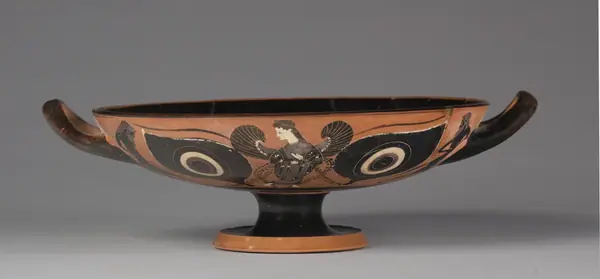 Black-Figure Eye Cup: Iris and Satyrs (A, B); Gorgoneion (I)Greek, Attic · c. 520–510 BCE
 Gorgoneion Antefix (Ornamental Roof Tile)Greek / South Italian, Taranto · c. 500 BCE
 La Gorgone (The Gorgon)Paris · ca. 1865
 Head of Medusacameo 1840–50, mount ca. 1860
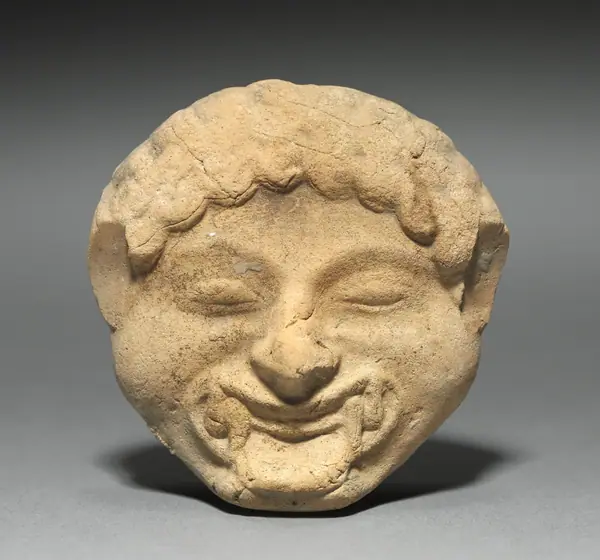 Gorgoneion PlaqueGreek / South Italian · c. 525–475 BCE
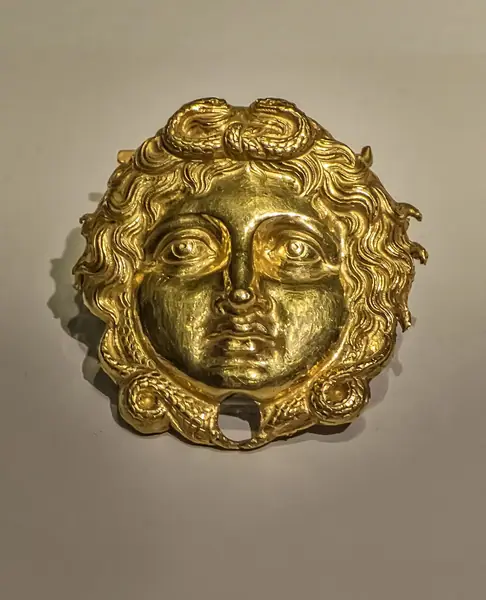 Gold Gorgon Head from the Cuirass (Breastplate) of Philip II of Macedon tomb at Aigai, Vergina Greece 4th century BCE4th century BCE
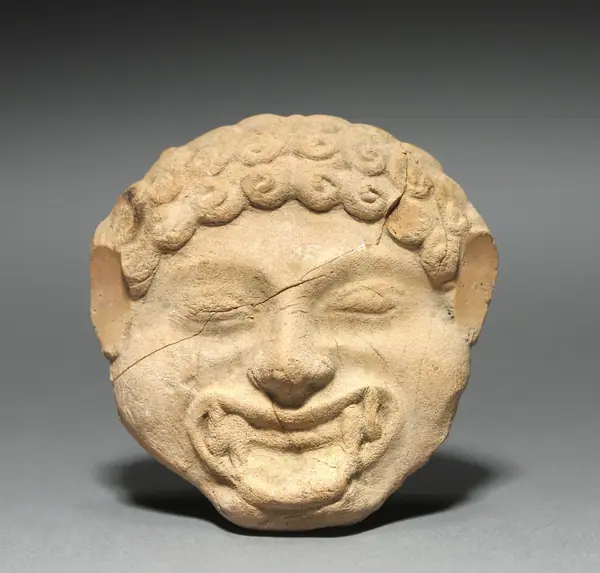 Gorgoneion Plaque with Incised Figure of a Dancing SatyrGreek / South Italian · c. 525–475 BCE
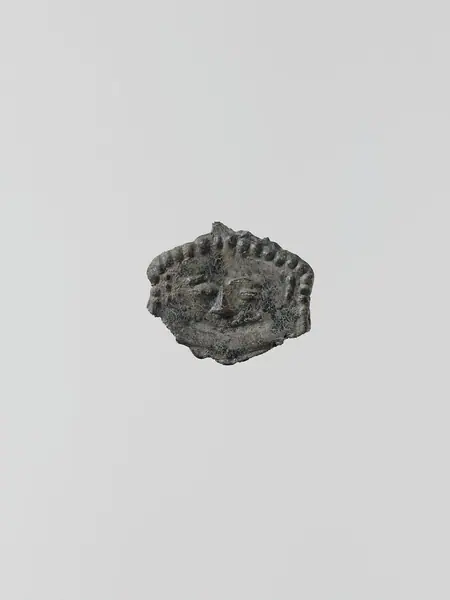 Lead ornament in the form of a gorgoneion (gorgon's face)6th–5th century B.C.
 Gold pendant in the form of a gorgoneion (Gorgon's face)circa 450 B.C.
 Head of a Medusa (?)mid-16th century
 Roundel, medallion with head of Medusa5th century B.C.
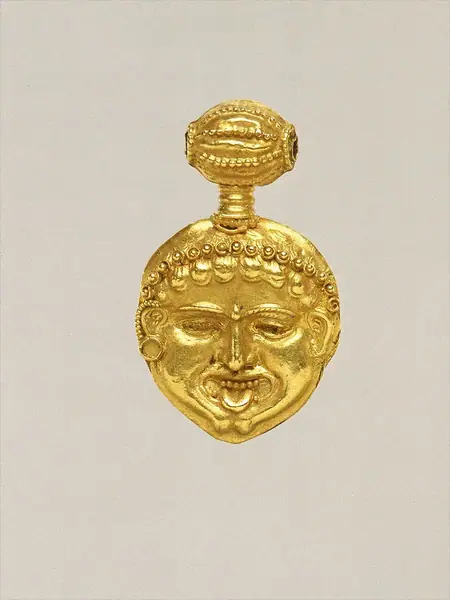 Gold pendant in the form of a gorgoneion (Gorgon's face)circa 450 B.C.
 Jasper intaglio: Head of Medusaca. 2nd–3rd century A.D.
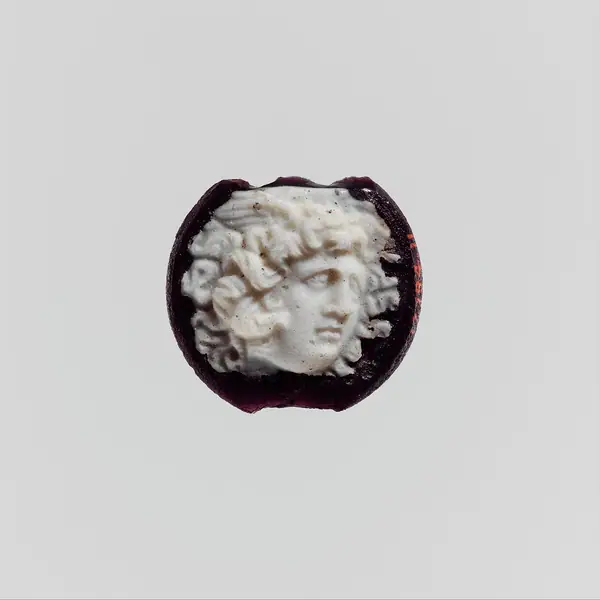 Cameo glass disk with Medusa head1 st century AD date QS:P571,+050-00-00T00:00:00Z/7
 Emesa necropolis - tomb 1 - Medusa ornament 03314
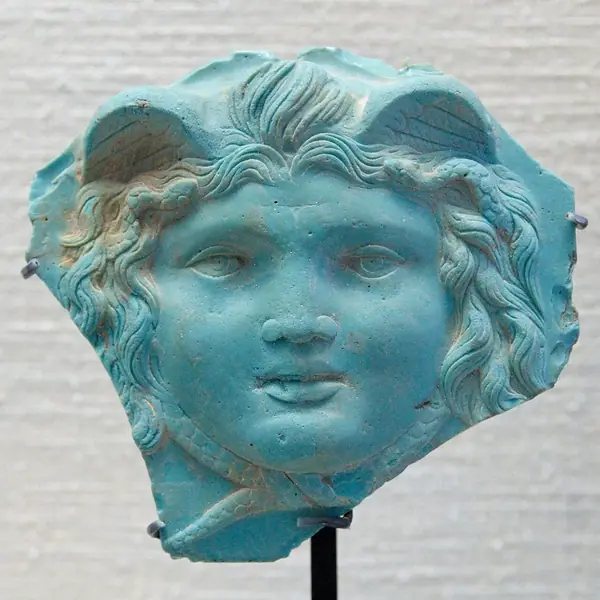 Glass paste gorgoneion CdM Paris
 Glittica romana, medusa, sardonice, III sec dc.
 Medusa, Cameo in sardonyx, Rome, I-IIth century
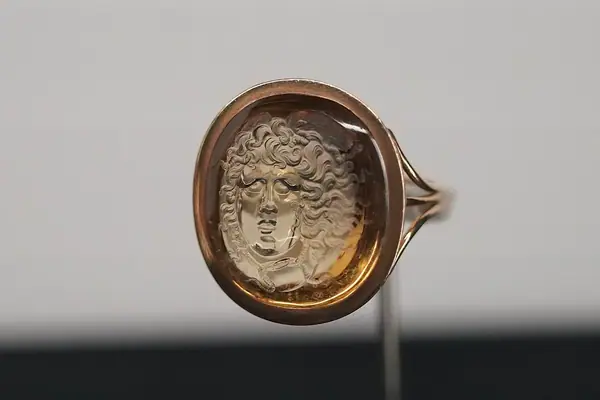 Medusa. Citrine intaglio. 17-18 centuries
 Medusa (2713352207)
 Medusa Cameo Petescia Berlin Altes Museum
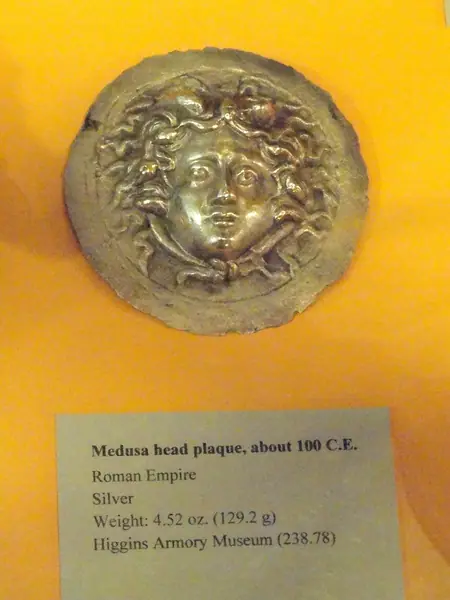 Medusa head plaque (silver), Roman Empire, c. 100 CE
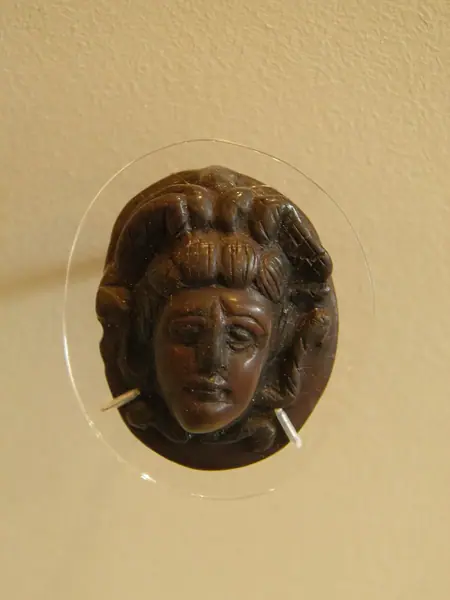 Yorkshire Museum, York (Eboracum) (7685663688)
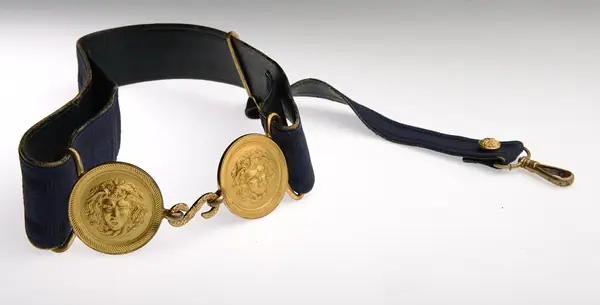 Ceinturon d'uniforme, 1
 Etruria, oreficerie del periodo arcaico, VI secolo ac., fibula a disco con gorgoneion
 Circular pendant of Medusa made of Jet
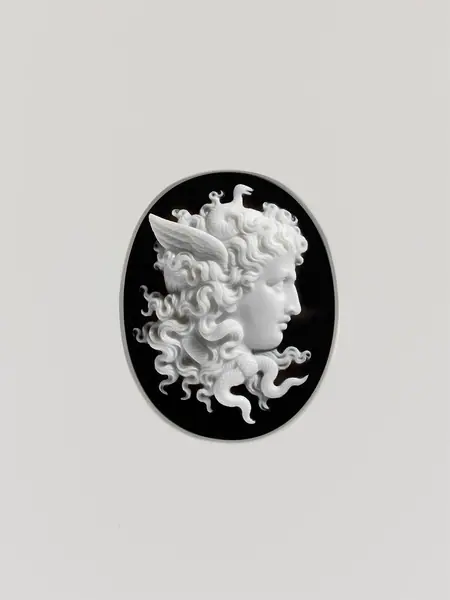 Medusa
 Tesoro di petescia (rieti), 50 ac-20 dc ca. cammeo montato su anello 02 medusa
 Cameo with head of Medusa - Landesmuseum (Zurich)
 Cammeo con gorgoneion, calcedonio, I-II sec dc
 Gorgon pendant
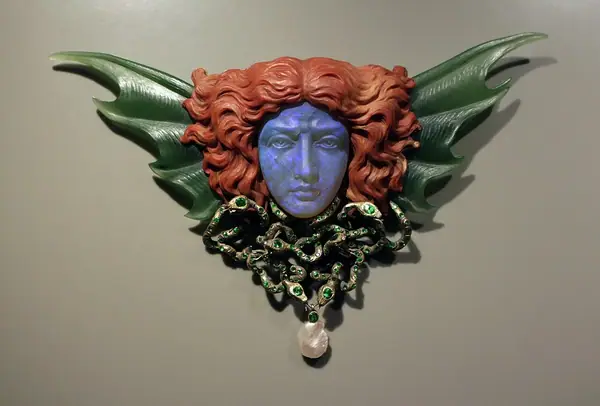 Gorgoneion Wilhelm Lucas von Cranach 1902 Berlin 24112018 1
 Pendant in the form of a Gorgoneion eye charm
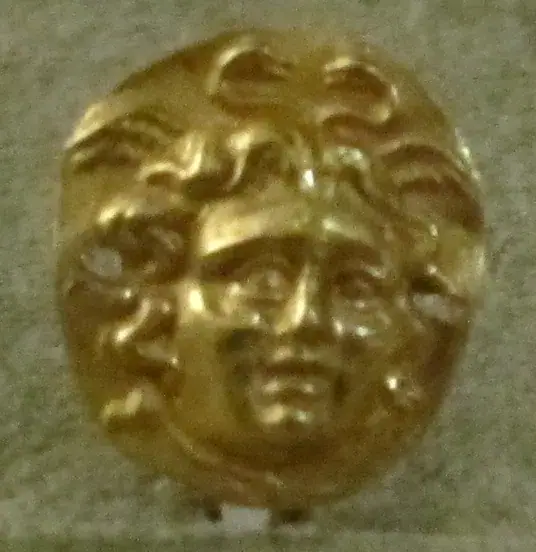 Testa di medusa in oro, III-I sec ac. ca 2
 Wilhelm Lucas von Cranach - Gorgoneion
 Ancient Greece Gold Ornament (27973908453)
 Arte romana, pamphilos, medusa su ametista
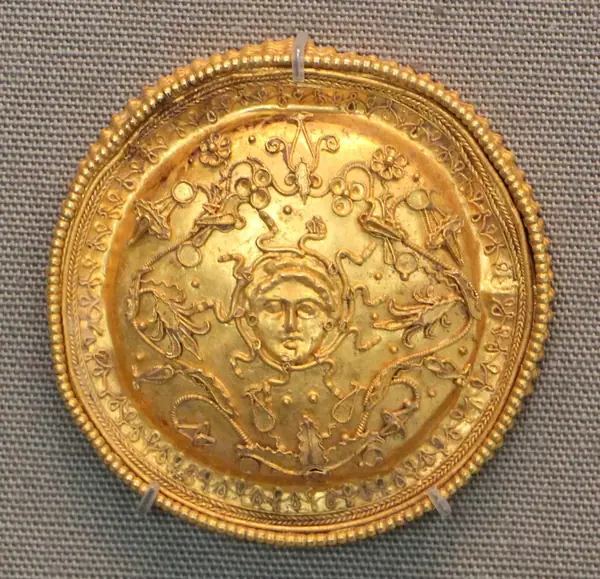 Ellenismo, ornamenti d'oro di provenienza incerta, III-II sec ac.
 Glass phalera Medusa Archéologie nationale 02042018
 Gold jewellery, head of Medusa, 200-300 AD, AM Agrigento
 Medusa Cameo Petescia Berlin Altes Museum 27042018 2
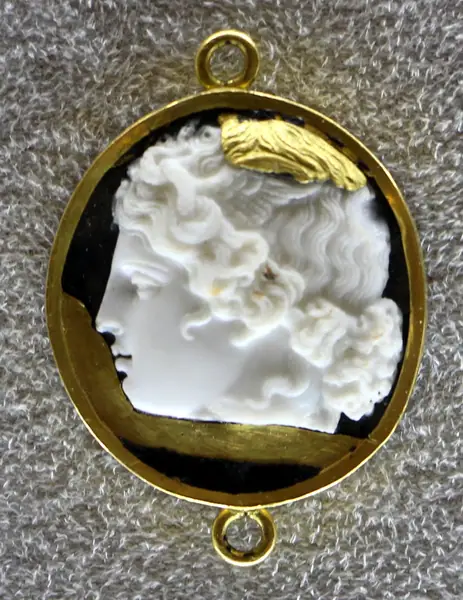 012 arte ellenistica, testa di medusa, III sec ac., restaurata in oro nel xv-xvi sec.
 041 arte romana, nereide e scudo con gorgoneion, calcedonio su altro frondo, III sec.
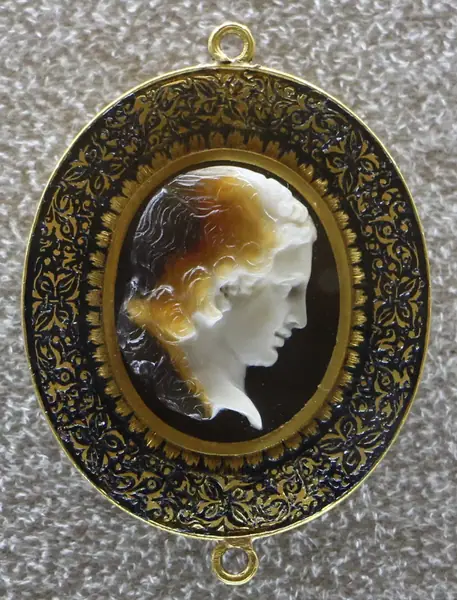 067 arte romana, testa di medusa di profilo, I sec. ac. ca
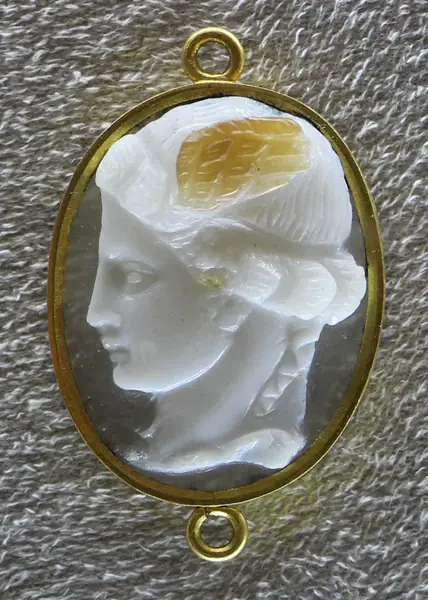 068 arte romana, testa di medusa di profilo, scambiata spesso per psiche, calcedonio, I sec ac. ca.
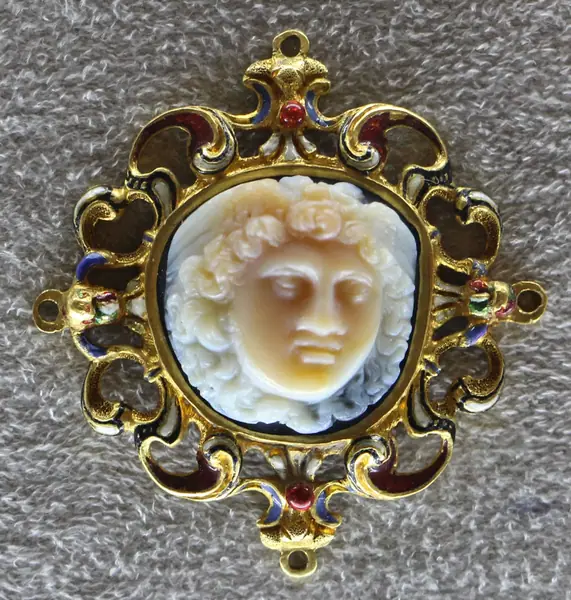 069 artista rinascimentale, testa di medusa, xvi sec. ca, calcedonio
 070 artista rinascimentale, testa di medusa, xvi sec. ca, calcedonio
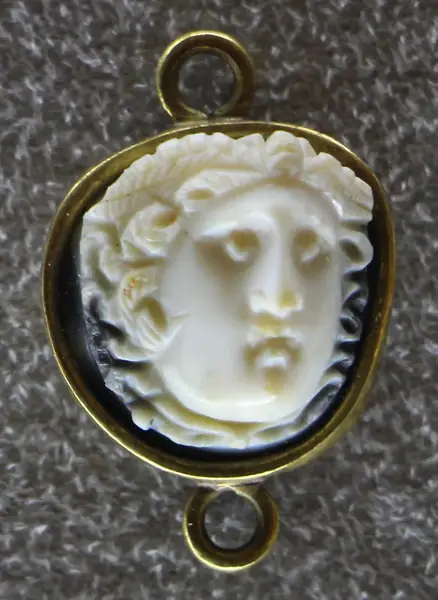 071 erte pseudoantica, testa di medusa, calcedonio, xvii sec.
 072 artista rinascimentale, testa di medusa, xvi-xvii sec.
 073 artista rinascimentale, testa di medusa, xvi sec. ca, calcedonio
 074 artista rinascimentale, testa di medusa, calcedonio, xvi-xvii sec.
 075 artista rinascimentale, testa di medusa, calcedonio, xvi-xvii sec.
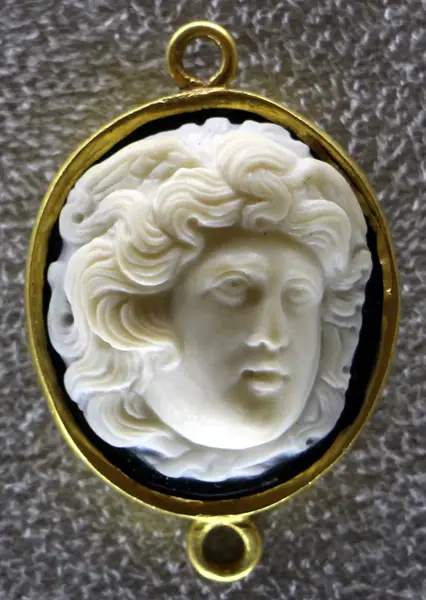 076 artista rinascimentale, testa di medusa, calcedonio, xvi-xvii sec.
 078 artista rinascimentale, testa di medusa di tre quarti, xvi sec, calcedonio
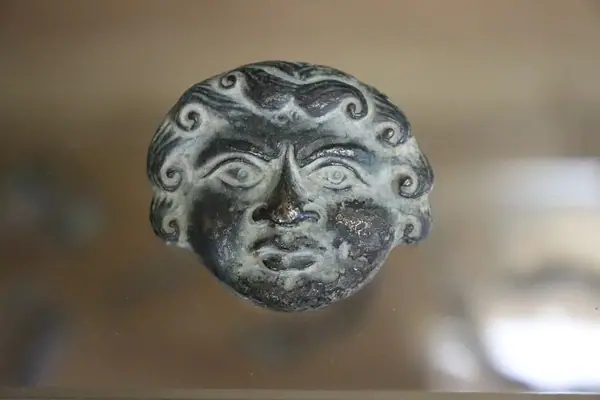 1967.2.1094 Médaillon - Gorgone (Musée de Die)
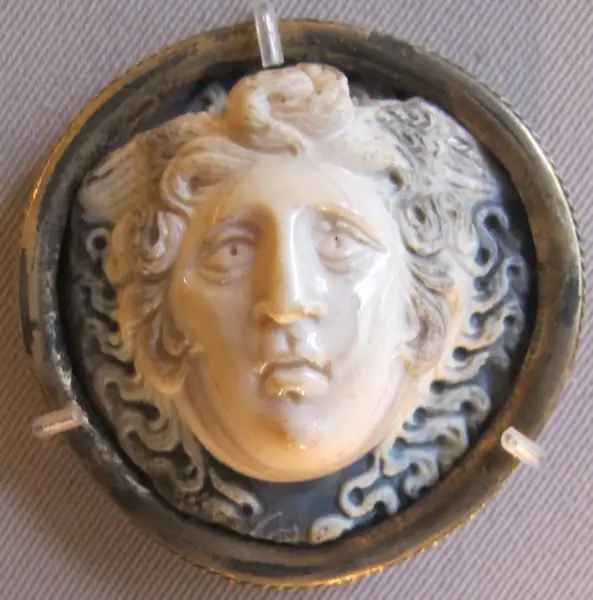 Glittica romana, medusa, sardonice, II-III sec dc.
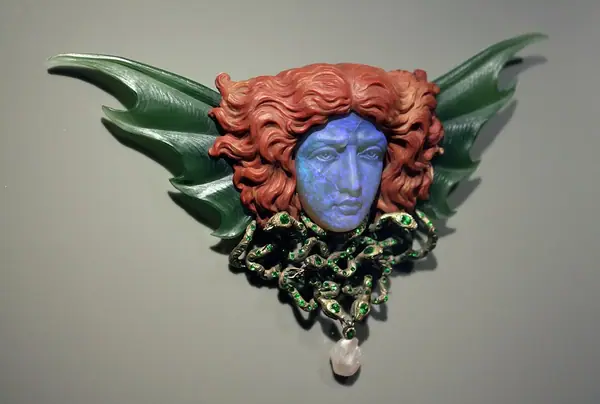 Gorgoneion Wilhelm Lucas von Cranach 1902 Berlin 24112018 2
 Medusa. Cameo in chalcedony. 1st century AD
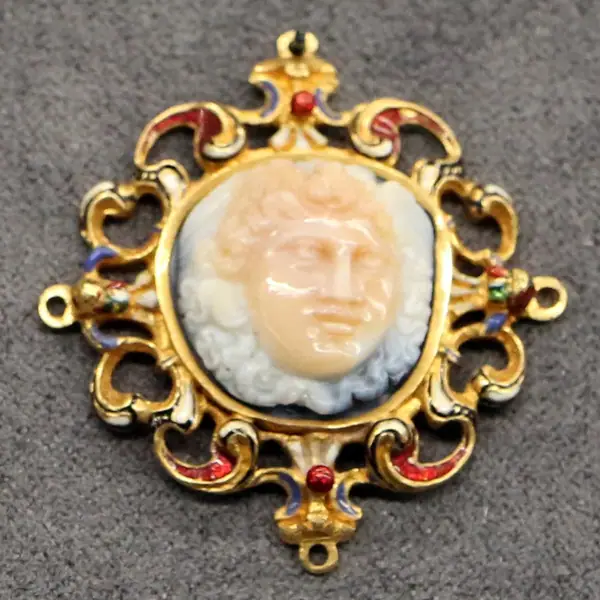 Cammeo con gorgoneion, I-II sec dc ca
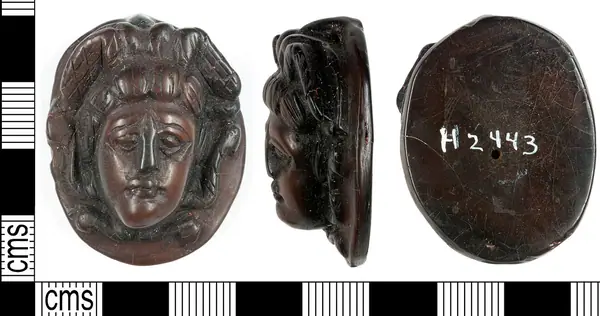 Oval Medusa pendant made of Jet
More from Greece, Etruria & Rome: Bullae · Lunulae (crescent pendants) · Magical gems (Abraxas, Chnoubis) · Amulet capsules & gold lamellae · Anatomical votives · Herakles knots & Sabazios hands · Other & unsorted Greece
Every type in the gallery
Anything in the gallery can be made: any piece, any tradition, in its own material or yours, by hand from the documented original. Numbered. Price on commission, quoted before anything is made. I reply within one business day.